
Heat Pump Water Heaters: Exploring the Differences Between 120V and 240V Options

Conor Crawford • August 6, 2023

Heat Pump Water Heaters: Exploring the Differences Between 120V and 240V Options

Interested in a Heat Pump Water Heater in the Bay Area?

Welcome to the Local Plumbing blog! As the owner of Local Plumbing in Sausalito, CA, I understand the importance of choosing the right water heater for your home. Heat pump water heaters are an excellent eco-friendly and cost-effective alternative to traditional electric or gas water heaters. In this guide, we'll explore the differences between 120V and 240V heat pump water heaters, their pros and cons, and highlight specific models from reputable brands like Rheem and AO Smith. Let's dive in!


Understanding Heat Pump Water Heaters:


Heat pump water heaters operate on the principle of extracting heat from the surrounding air and transferring it to the water, offering substantial energy savings and reduced electricity consumption, think of a heat pump water heater as the opposite to a refrigerator or freezer.


  • The 120V Heat Pump Water Heater:


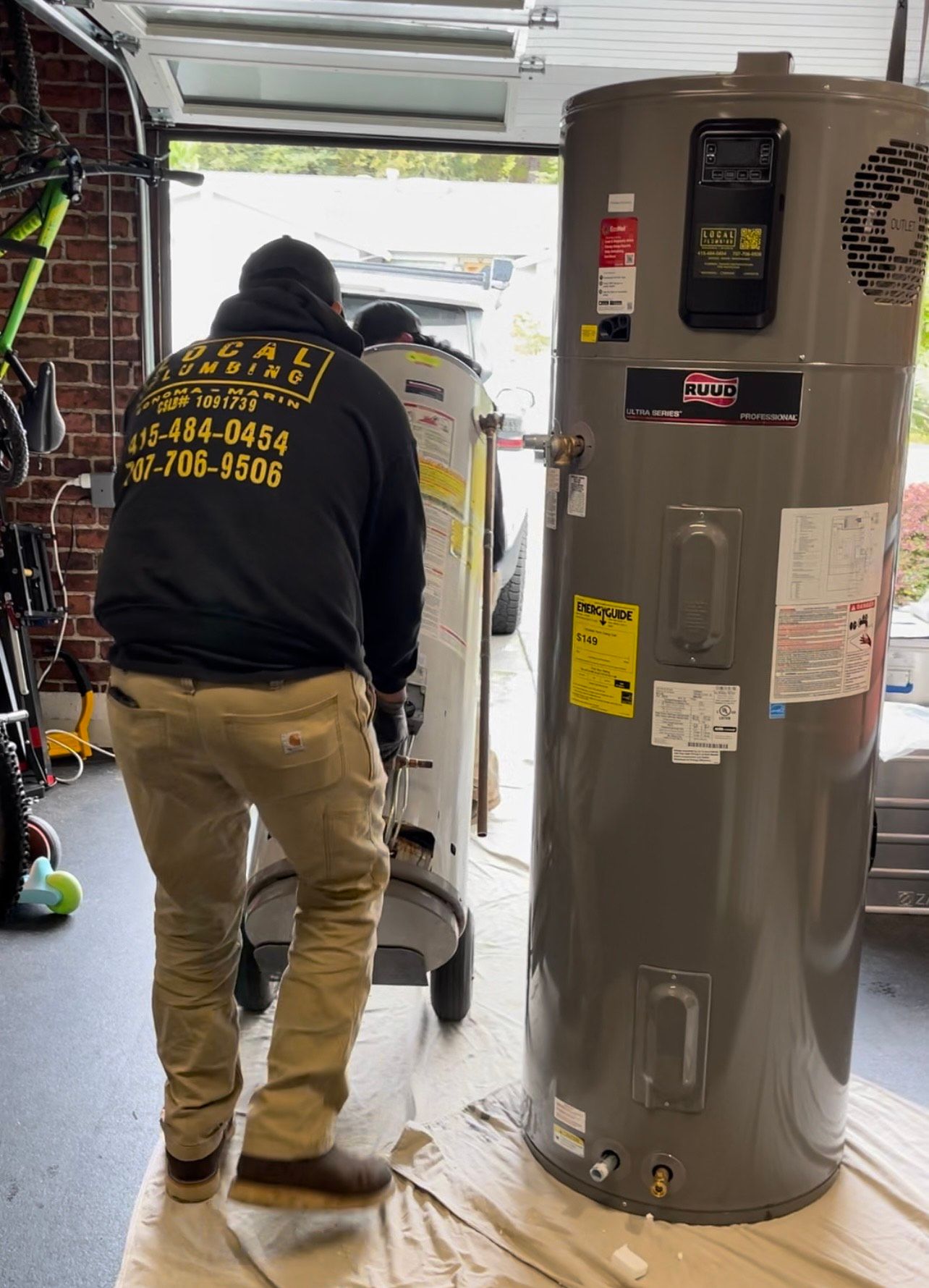
The 120V heat pump water heater offers versatility, energy efficiency, and easy installation, making it an excellent choice for individuals or small families with moderate hot water needs. Its compact size allows for installation in various spaces, and its eco-friendly operation contributes to a greener environment. The Rheem Performance Platinum 50-Gallon Hybrid Electric Heat Pump Water Heater, among other models, exemplifies the reliability and performance of this type of heat pump water heater.


Pros:

a. Versatility: 120V heat pump water heaters are ideal for small to medium-sized households with lower hot water demand. They can be installed in various spaces due to their compact size.


b. Easy Installation: These units require a standard household electrical outlet, making the installation process hassle-free and cost-effective.


c. Energy Efficiency: Although not as powerful as their 240V counterparts, 120V heat pump water heaters still provide significant energy savings, reducing utility bills and environmental impact.


Cons:

a. Limited Capacity: Due to their lower voltage, 120V heat pump water heaters might have a limited hot water output, leading to potential wait times during high-demand periods.


b. Slower Heating: It might take longer for these heaters to reach the desired water temperature.


Best Suited For:

  • Individuals or small families with moderate hot water needs.
  • A cost effective way to avoid large electrical upgrades.
  • Homes with limited space for the water heater.


  • The 240V Heat Pump Water Heater:


The 240V heat pump water heater offers high capacity, faster heating, and excellent energy efficiency, making it an ideal choice for larger families with higher hot water needs and homes in colder climates. The AO Smith Voltex® Hybrid Electric Heat Pump Water Heater exemplifies the superior performance and reliability of this type of heat pump water heater.


Pros:


a. High Capacity: 240V heat pump water heaters are designed for larger households with higher hot water demands, providing an abundant and consistent supply.


b. Faster Heating: The higher voltage allows for quicker heating, ensuring hot water is readily available even during peak demand.


c. Better Performance in Cold Climates: These heaters, like the AO Smith Voltex® Hybrid Electric Heat Pump Water Heater, can maintain efficiency even in colder environments.


Cons:


a. Higher Installation Cost: The 240V units require specialized electrical wiring, which may increase the upfront installation cost, to qualify for local government rebates, permitting will be required for this work.


b. Energy Consumption: While more efficient than conventional heaters, 240V heat pump water heaters might use more energy than 120V models.


Best Suited For:

  • Large families with high hot water demand.
  • Extra comfort knowing you have the 240v element as a backup heating source.
  • Homes in colder climates.


When choosing between a 120V and 240V heat pump water heater, consider your household's hot water needs, budget, and available space. The 120V option is versatile, energy-efficient, and perfect for small to medium-sized households. On the other hand, the 240V option is suitable for larger families with high hot water demand, offering faster heating and better performance in colder climates.


At Local Plumbing in Sausalito, CA, we specialize in installing, repairing, and maintaining heat pump water heaters from top brands like Rheem and AO Smith. Our expert team can help you select the ideal water heater for your specific needs and ensure a professional installation. Contact us today for personalized advice and reliable services, and enjoy the comfort and energy efficiency of a heat pump water heater in your home!


Local Plumbing, your local plumber for all of Marin and Sonoma County.
Hand connecting a flexible hose to a wall-mounted tankless gas water heater.
August 5, 2026
Compare tank, tankless & heat pump water heater options for your Tiburon, CA, home. Call (415) 234-0370 for a free quote before the 2027 deadline.
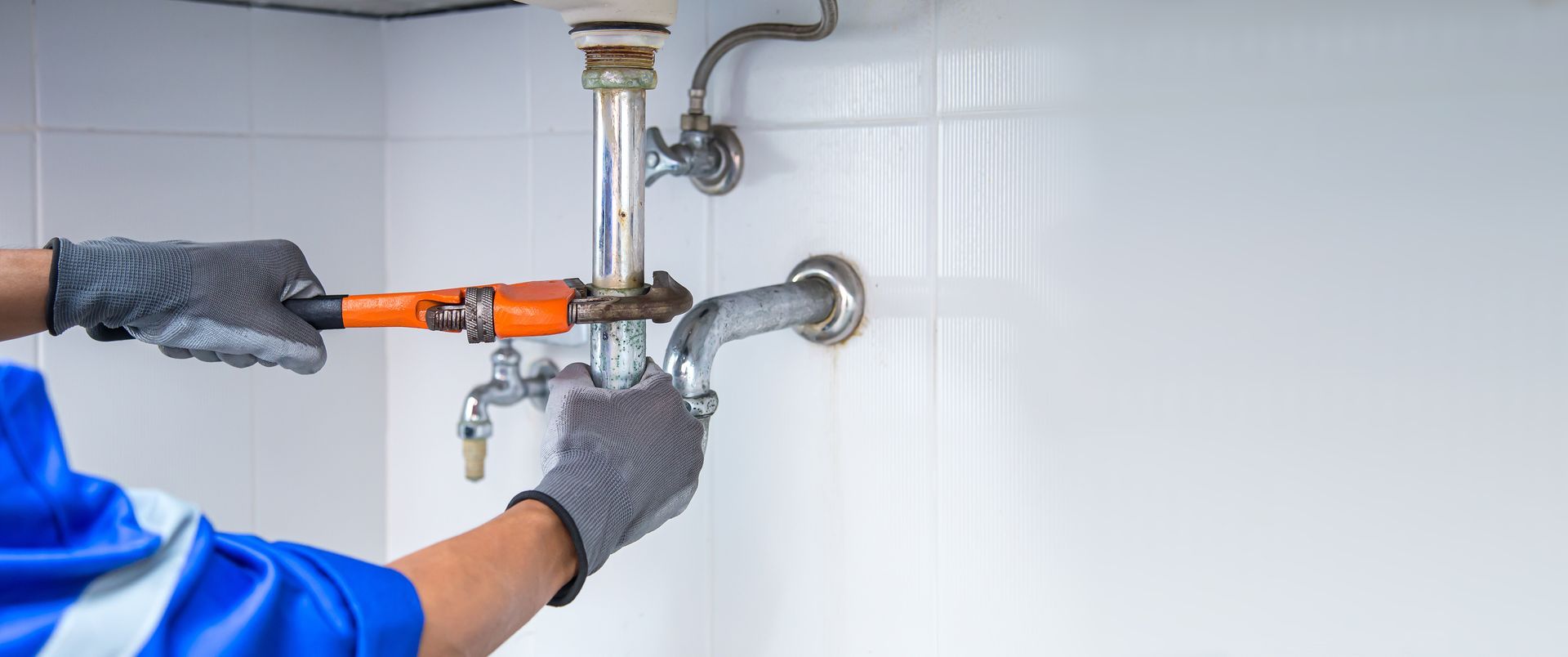
A plumber in a blue uniform and gray gloves uses an orange pipe wrench to tighten a chrome sink
July 6, 2026
Need plumbing services in San Rafael, CA? Local Plumbing is a licensed C-36 contractor with 300+ 5-star reviews. Get upfront pricing. Call today.
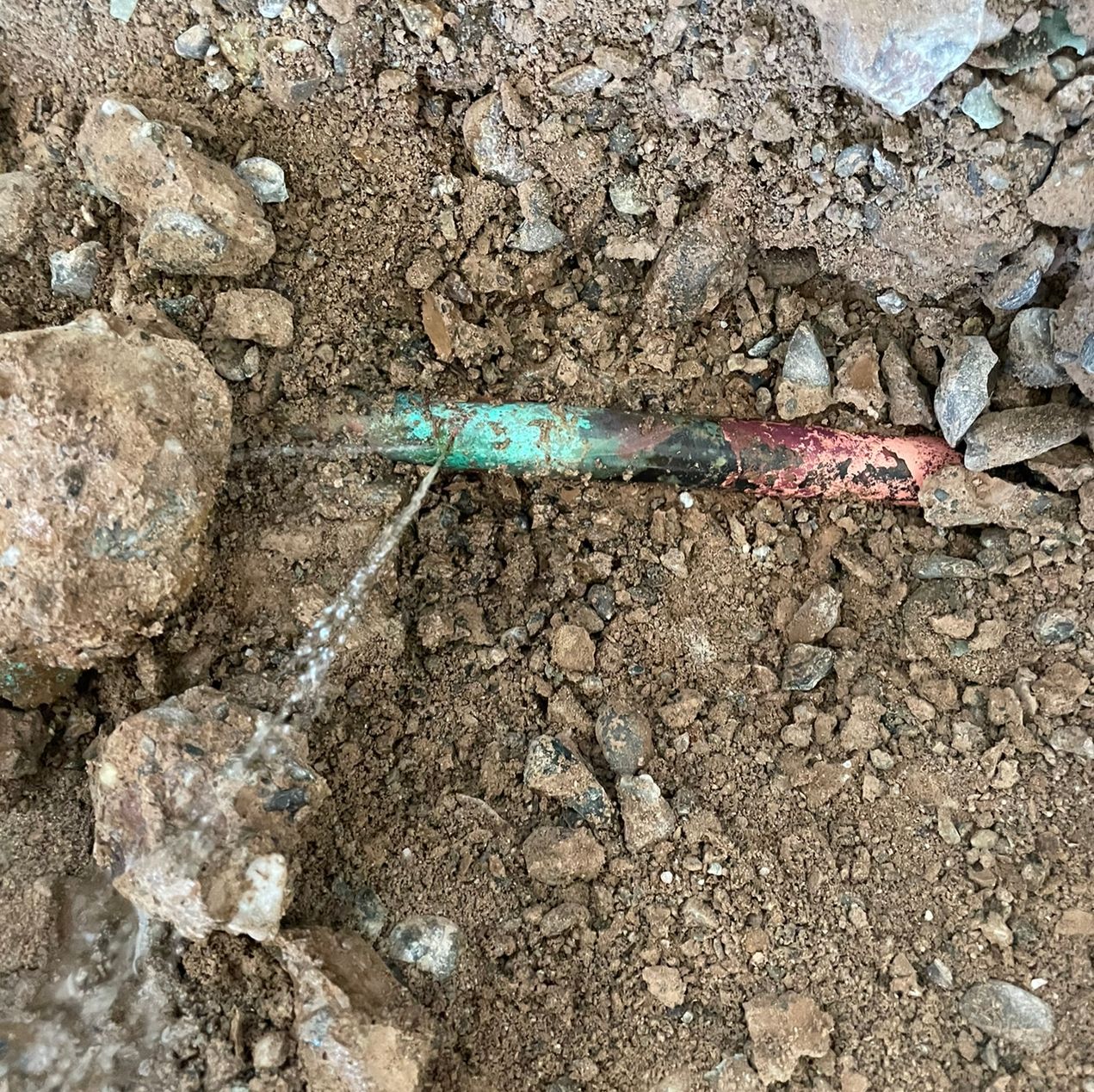
underground copper piping showing an obvious failure and water leaking from it
By Conor Crawford June 29, 2026
A sudden high water bill often means a hidden plumbing leak. Learn the common causes and how Local Plumbing finds hidden water leaks fast.
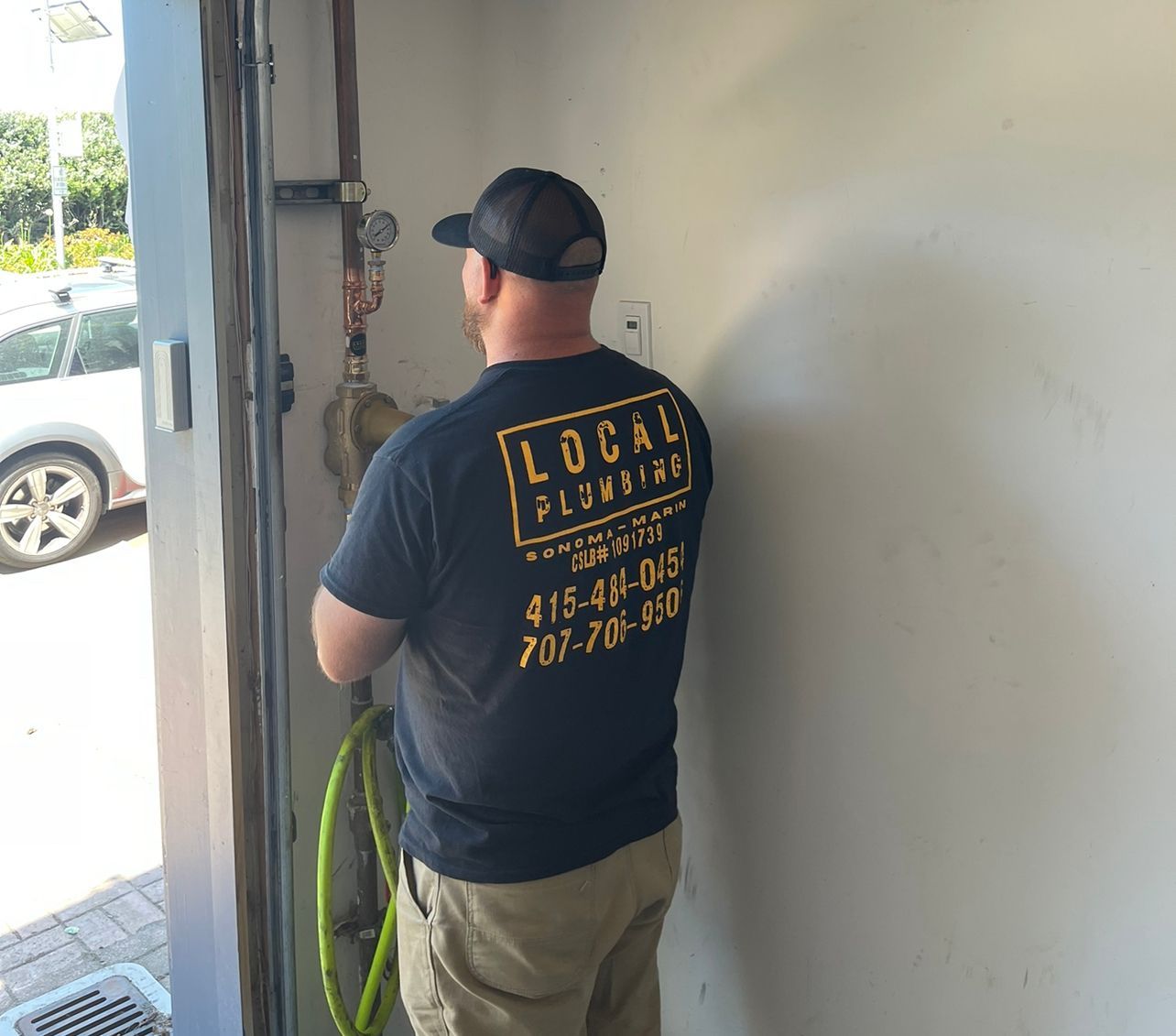
Plumber in corner of garage area locating the water shut off
By Conor Crawford June 29, 2026
Learn where your main water shutoff valve is located, when to use it and why every Marin homeowner should know how to stop a plumbing emergency.
By Conor Crawford June 17, 2026
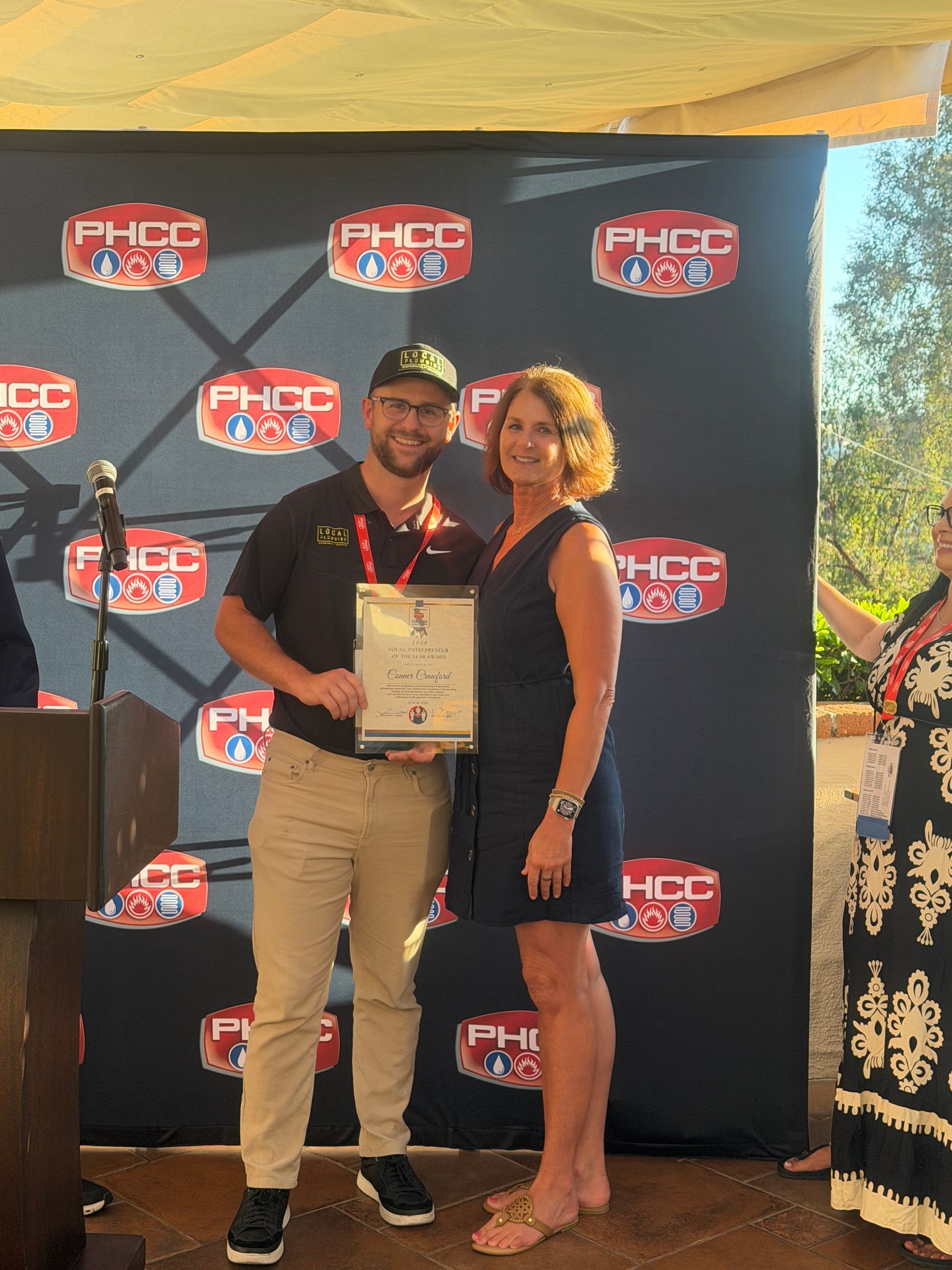
A Proud Moment for Local Plumbing
A plumber is kneeling on a wet floor searching for a plumbing leak.
By Admin May 14, 2026
Discover how Local Plumbing detects hidden plumbing leaks in San Rafael, CA, before expensive damage hits. Click here for expert insight and savings!
Close-up of a metal plumbing fitting being tightened with a wrench.
May 14, 2026
Discover essential seasonal plumbing tips for your home in Kentfield, CA, with Local Plumbing. Click here to read more.
A wrench tightening a metal pipe fitting wrapped with thread seal tape.
April 17, 2026
Discover hidden plumbing issues in older San Rafael, CA homes with Local Plumbing. Call 628-237-7654 or click here to learn more about our services.
By Conor Crawford March 19, 2026
If you’ve heard that gas water heaters are being banned in California in 2027, you’re not alone. At Local Plumbing, we’re already getting weekly calls from homeowners in San Rafael, Mill Valley, Novato, Tiburon, and across Marin County asking: “Do I need to replace my gas water heater right now?” “Will I be forced to go electric?” “What happens if mine breaks after 2027?” Let’s break it down clearly — no fluff, no politics — just real-world guidance from a local plumbing company that installs these systems every day. Is California Banning Gas Water Heaters in 2027? Short answer: Yes… but not exactly how people think. Starting January 1, 2027, new regulations in the Bay Area will require: All newly installed residential water heaters to meet ultra-low (zero) NOx emissions standards In reality, this means: Traditional gas water heaters will no longer be allowed in most replacement situations Electric systems — especially heat pump water heaters — will become the standard The Biggest Misconception (Important) Let’s clear this up right away: You do NOT have to remove your existing gas water heater There is: No forced removal No retroactive ban No inspections coming to your house You can keep your current system running as long as it works. What Happens When Your Water Heater Fails After 2027? This is where things change. If your gas water heater fails after 2027, you will likely: NOT be allowed to replace it with another gas unit Be required to install: A heat pump water heater (most common) Or another approved electric system This is why people are calling it a “ban” — because the change happens at replacement, not before. How This Impacts Marin County Homes Marin homes present some unique challenges: 1. Electrical capacity issues Many homes in: San Anselmo Fairfax Mill Valley …have older panels that may not support a heat pump water heater without upgrades. 2. Tight install spaces Closets Garages with low clearance Under-stair installs Heat pump units are: Larger Require airflow Need condensate drainage 3. Higher upfront costs (but rebates help) Typical comparison: Type Installed Cost Gas tank (today) $3,500–$6,500 Heat pump water heater $6,500–$12,000 BUT: Marin County homeowners may qualify for $2,000–$5,000+ in rebates Lower operating costs over time What About Tankless Water Heaters? This is a big question we get. Gas tankless water heaters (Navien, Rinnai, etc.) are also affected After 2027: New gas tankless installs will likely not be permitted (but not confirmed) Electric tankless is usually not viable in Marin homes due to electrical demand This makes heat pump systems the primary replacement path Timeline: What’s Coming Next 2027 → Residential water heaters affected 2029 → Gas furnaces likely impacted Early 2030s → Broader electrification across homes This is part of California’s long-term push toward building electrification. Should You Replace Your Water Heater Before 2027? This depends on your situation. Consider replacing early if: Your unit is 8–12+ years old It’s showing signs of failure You want a simple like-for-like gas swap Your home is not ready electrically Wait if: Your system is newer and reliable You’re planning a remodel You want to take advantage of: Rebates Newer heat pump technology Local Plumbing’s Recommendation (Real-World Advice) At Local Plumbing, here’s how we’re advising Marin homeowners: Don’t panic — but do plan The worst-case scenario is: 🚨Your water heater fails unexpectedly in 2027 🚨You’re forced into a rushed, expensive electric upgrade Instead, we recommend: ✔ Evaluate your current system lifespan ✔ Assess your electrical panel capacity ✔ Create a planned replacement strategy Why This Matters for Marin Homeowners This isn’t just a regulation — it’s a shift in how homes are built and serviced. And in Marin County specifically: Older housing stock Higher installation costs Strict permitting This transition needs to be handled correctly the first time FAQ: Gas Water Heater Ban (Marin County) Can I still repair my gas water heater after 2027? Yes — repairs are still allowed. Can I install a used or existing gas unit? No — new installations must meet emissions standards. Are there exemptions? Possibly — for: Electrical limitations Certain property types Hardship cases (These are still evolving) Are heat pump water heaters worth it? Yes — when installed correctly. But they must be: Properly sized Installed in the right location Matched with your home’s electrical system Final Thoughts 👉 Gas water heaters aren’t being “ripped out” in 2027 👉 But they are being phased out at replacement For Marin homeowners, this means: ⚠️ Planning ahead is critical 💰 Costs and logistics will change 🔌 Electrical readiness matters more than ever Need Help Planning Your Upgrade? If you’re in: San Rafael, Mill Valley, Novato, Tiburon, Larkspur, Fairfax, or anywhere in Marin County Local Plumbing can help you: Evaluate your current water heater Plan for 2027 compliance Install gas (while still allowed) or heat pump systems Maximize available rebates Call or text Local Plumbing today Local Plumbing is your local Marin plumber
By Conor Crawford February 23, 2026
When your boiler stops working, it’s not just inconvenient — it can shut down your entire home’s comfort system. At Local Plumbing, we specialize in professional boiler service and repairs throughout Marin County, including San Rafael, Mill Valley, Tiburon, Sausalito, Novato, and surrounding areas. Whether you have a modern high-efficiency condensing boiler or an older cast-iron unit, we diagnose it properly and fix it the right way. Why Boiler Service Is So Important Boilers are different from forced-air systems. They’re pressurized, sealed hydronic systems that require trained technicians to maintain safely and efficiently. Annual service prevents: Loss of efficiency (higher gas bills) Circulator pump failures Air lock issues in radiant systems Ignition and flame sensing problems Heat exchanger damage Leaks at relief valves or expansion tanks Carbon monoxide risks In Marin County, especially in older homes like Eichlers or custom homes with radiant slab heating, neglected boilers can cause serious repair costs if not maintained. Signs Your Boiler Needs Repair Call us if you notice: No heat or uneven heat in zones Boiler making banging or kettling noises Radiant floors not warming properly Pressure dropping below 12 PSI Relief valve dripping Error codes on Navien, NTI, Viessmann, Lochinvar, etc. Pilot light or ignition failure Sudden spike in gas bills Many “no heat” calls we respond to are small issues caught too late — failed sensors, dirty flame rods, or clogged condensate traps. Boilers We Service We regularly service and repair: NTI TRX Series Navien NHB & NCB Lochinvar Noble & Knight Viessmann Vitodens Rinnai boilers Triangle Tube (legacy systems) Munchkin boilers Cast iron Weil-McLain & Burnham If it’s hydronic — we work on it. What’s Included in Our Boiler Service Our full boiler maintenance service includes: ✔ Combustion Analysis We use a combustion analyzer to dial in proper gas-to-air ratio for maximum efficiency and safety. ✔ Heat Exchanger Cleaning Condensing boilers require proper cleaning to prevent efficiency loss and corrosion. ✔ Condensate System Inspection We clean traps and neutralizers to prevent blockages. ✔ Expansion Tank Testing A failed expansion tank can cause pressure spikes and relief valve discharge. ✔ Circulator & Zone Check We test pumps, zone valves, and controls to ensure even heat distribution. ✔ Safety Component Verification We test pressure relief valves, flame sensors, ignition systems, and safety shutoffs. ✔ Radiant System Inspection We check manifolds, air separators, pressure levels, and glycol if present. Emergency Boiler Repair in Marin If your boiler fails in the middle of winter, we provide fast response throughout: San Rafael Mill Valley Tiburon Corte Madera Larkspur Sausalito Novato We stock common repair parts for the systems most commonly installed in Marin homes. When Is It Time to Replace Instead of Repair? We’ll give you honest advice. Replacement may make more sense if: Boiler is 15–20+ years old Heat exchanger is cracked Parts are discontinued Major control board failure on an aging unit Repeated service calls We specialize in high-efficiency condensing boiler replacements and can evaluate whether repair or replacement makes better financial sense. Why Marin Homeowners Choose Local Plumbing Licensed C-36 Plumbing Contractor Hydronic specialists (not just general plumbers) Combustion analysis on every service Experience with radiant slab systems Local warehouse & training facility in San Rafael Clean, uniformed, professional technicians We don’t “just show up and reset the boiler.” We diagnose root causes. Boiler Service FAQs How often should I service my boiler? Once per year minimum. High-efficiency condensing boilers absolutely require annual cleaning. How long does boiler service take? Typically 2-3hrs, depending on system condition. Does boiler service improve efficiency? Yes. Dirty heat exchangers and poor combustion tuning can increase gas consumption significantly. Is boiler maintenance required for warranty? Most manufacturers require documented annual maintenance. Schedule Your Boiler Service Today If your boiler hasn’t been serviced in the past 12 months, now is the time. Serving Marin County homeowners with expert hydronic knowledge and real diagnostics — not guesswork. Local Plumbing Your Local Marin Boiler Experts Call today to schedule service.