Bay Area Gas Water Heater Rule: Now January 2028
Updated after the Air District’s November 4, 2026 vote
The Bay Area’s zero-NOx rule for gas water heaters, originally set for 2027, now starts with tank heaters manufactured after January 1, 2028. Boilers and tankless heaters have until 2033. Here is what changed and what it means for your home in Marin and Sonoma.
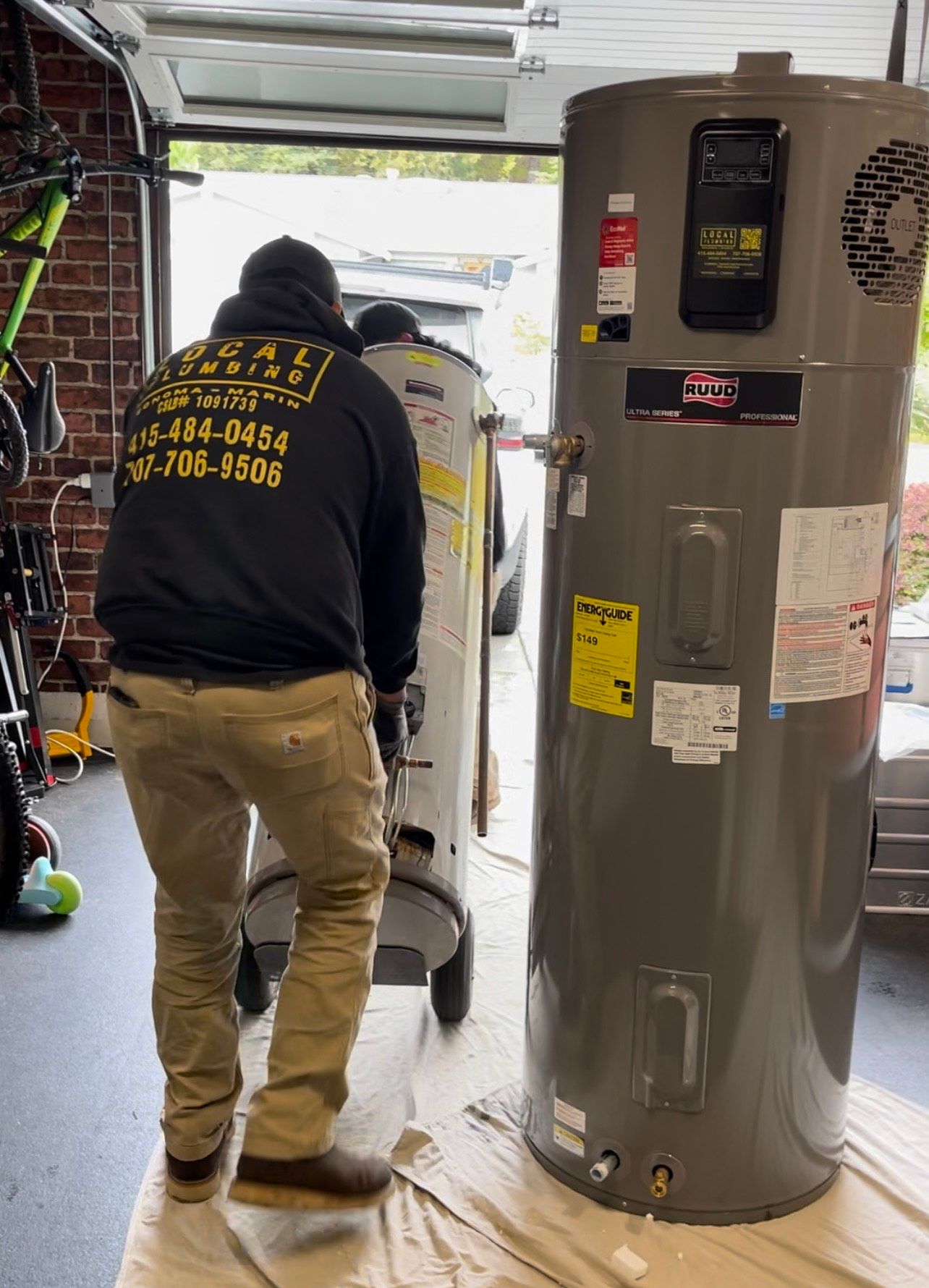
If you searched for the “gas water heater ban 2027,” here is the update. On November 4, 2026 the board of the Bay Area Air District amended Rule 9-6 and moved the date back one year. Gas tank water heaters can still be installed through all of 2027.
No one has to remove a working gas water heater. The rule only applies when a new heater is sold or installed.
What Changed on November 4, 2026
- Home gas tank water heaters(over 30 gallons, 75,000 BTU/hr or less): the zero-NOx standard now applies to units manufactured after January 1, 2028. It was January 1, 2027.
- Boilers and larger gas water heaters(over 75,000 up to 2,000,000 BTU/hr, which includes whole-house tankless units): now units manufactured after January 1, 2033. It was January 1, 2031.
- New exemption certificates for income, space, ceiling-height and electrical limits, plus a 12-month temporary replacement path for burnouts.
- Not covered: tanks of 30 gallons or less and mobile-home water heaters are not subject to the zero-NOx standard.
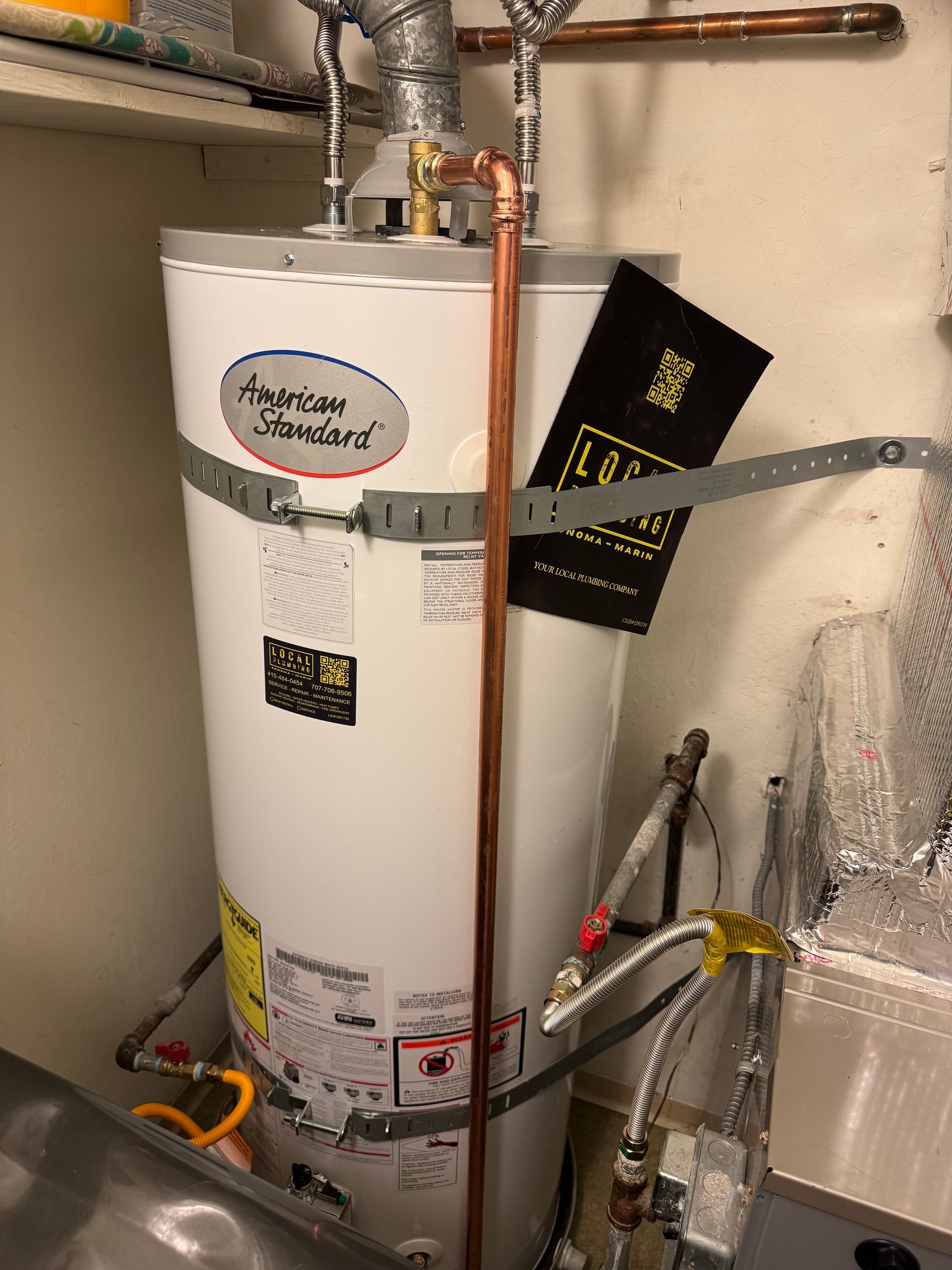
In plain terms: if your gas tank fails in 2027, you can still replace it with gas. From 2028, a new gas tank made after January 1, 2028 needs an Air District exemption certificate. Otherwise the replacement has to be a zero-NOx unit, which in practice usually means an electric heat pump water heater.
Timeline by Equipment
| Equipment | Old date | After the November 2026 vote |
|---|---|---|
| Gas tank water heater, over 30 gal, 75,000 BTU/hr or less (typical home tank) | Jan 1, 2027 | Units made after Jan 1, 2028 |
| Gas tank water heater, 30 gal or less | Jan 1, 2027 | Not subject to zero-NOx |
| Boilers, tankless and large tank heaters, over 75,000 to 2,000,000 BTU/hr | Jan 1, 2031 | Units made after Jan 1, 2033 |
| Hydronic water heaters, buildings with 5+ units, deed-restricted affordable housing, nonprofit co-ops | Jan 1, 2027 | Gas allowed with a certificate for units made before Jan 1, 2033 |
| Mobile-home water heaters | – | Not subject to zero-NOx |
| Gas furnaces (separate rule, Rule 9-4) | Jan 1, 2029 | Unchanged, under review |
Dates go by when the heater was manufactured, not when it is installed. Manufacturers must show the date of manufacture on the carton and the rating plate.
What the Rule Doesn’t Do
- It doesn’t make you remove a working gas water heater or boiler.
- It doesn’t stop repairs. You can keep fixing the heater you have.
- It doesn’t cover gas stoves, dryers or fireplaces.
- It doesn’t apply to tanks of 30 gallons or less or to mobile-home water heaters.
- It doesn’t apply in Northern Sonoma County air district areas (see below).
Exemptions and How They Work
From 2028, a gas water heater that doesn’t meet zero-NOx can be sold and installed only with an Air District exemption certificate, issued before installation. Each certificate covers one water heater at one address.
Low-income or housing-cost-burdened
Owners in a listed program such as CARE, FERA, CalFresh or Medi-Cal, or at or below 80% of area median income. Also owners whose mortgage plus property tax is 28% or more of gross household income. Owners self-certify, and this exemption isn’t limited to one use per address.
Space or ceiling height
An existing heater in a small enclosed space (under 700 cubic feet) that can’t be opened up to a larger space, a garage ceiling under 7.2 feet, or another indoor ceiling under 6 feet. Owner self-certifies. One time per address, existing buildings only.
Electrical limits
A licensed contractor certifies a limit such as a panel under 100 amps, no open breaker space, a new 240V circuit that needs more than 50 feet of conduit, or knob-and-tube wiring with more than 50 feet of conduit to the panel. One time per address, existing buildings only.
Hydronic, multifamily and affordable housing
Gas water heaters used for hydronic heating, in buildings with 5 or more units, in deed-restricted affordable housing or nonprofit co-ops, and at some high-temperature businesses can use gas units made before January 1, 2033 with a certificate.
Still being set up: the online certificate system isn’t live yet. A processing fee for space and electrical exemptions is expected, but no amount has been set; Air District staff take the fee details to the Board in early 2027. The Air District decides every exemption, so no plumber can promise you will qualify. We can walk through the criteria with you and, as your licensed contractor, document your electrical panel.
Planning your water heater replacement? Call or book today.
If Your Water Heater Fails
Through December 31, 2027
A failed gas tank can be replaced with another gas tank, the same as today.
From January 1, 2028
When a compliant install can’t happen right away, a licensed contractor can get a certificate and put in a temporary gas replacement for up to 12 months. Within those 12 months it has to be swapped for a compliant unit or covered by one of the exemptions above, and the contractor reports it to the Air District.
Because the date goes by manufacture, a gas tank built before January 1, 2028 can still be installed after that date, but older stock won’t last forever, so don’t plan around it. No hot water now? Call or text us 24/7 at (415) 234-0370.
Boilers and Tankless: January 2033
Most home space-heating boilers and whole-house gas tankless water heaters are rated above 75,000 BTU/hr. For that class, the zero-NOx standard applies to units manufactured after January 1, 2033 (it was 2031). Until then, new gas boilers and gas tankless heaters can still be installed. Check the input rating on the nameplate, or send us a photo and we’ll read it for you.
Air District staff must report to the Board on the 2033 class by January 1, 2031, so we’ll keep this page updated. More on boilers and radiant heating and tankless water heaters.
Northern Sonoma: A Different Air District
Healdsburg, Cloverdale, Geyserville, Guerneville, Forestville, Monte Rio and the Sonoma coast are in the Northern Sonoma County Air Pollution Control District, so the Bay Area’s Rule 9-6 doesn’t apply there. Windsor, Sebastopol, Occidental and Valley Ford are split between the two districts, so it depends on the exact address.
Marin County and southern Sonoma County, including Santa Rosa, Petaluma, Rohnert Park, Cotati and Sonoma, are in the Bay Area Air District. Not sure about your address? We’ll check it before you decide.
Your Options Now
Replace with gas in 2027
Gas tanks can still be installed through 2027. A good fit if your tank is old or failing and your home isn’t ready for electric. Gas tank replacement typically runs $3,500–$6,500 installed.
Heat pump water heater
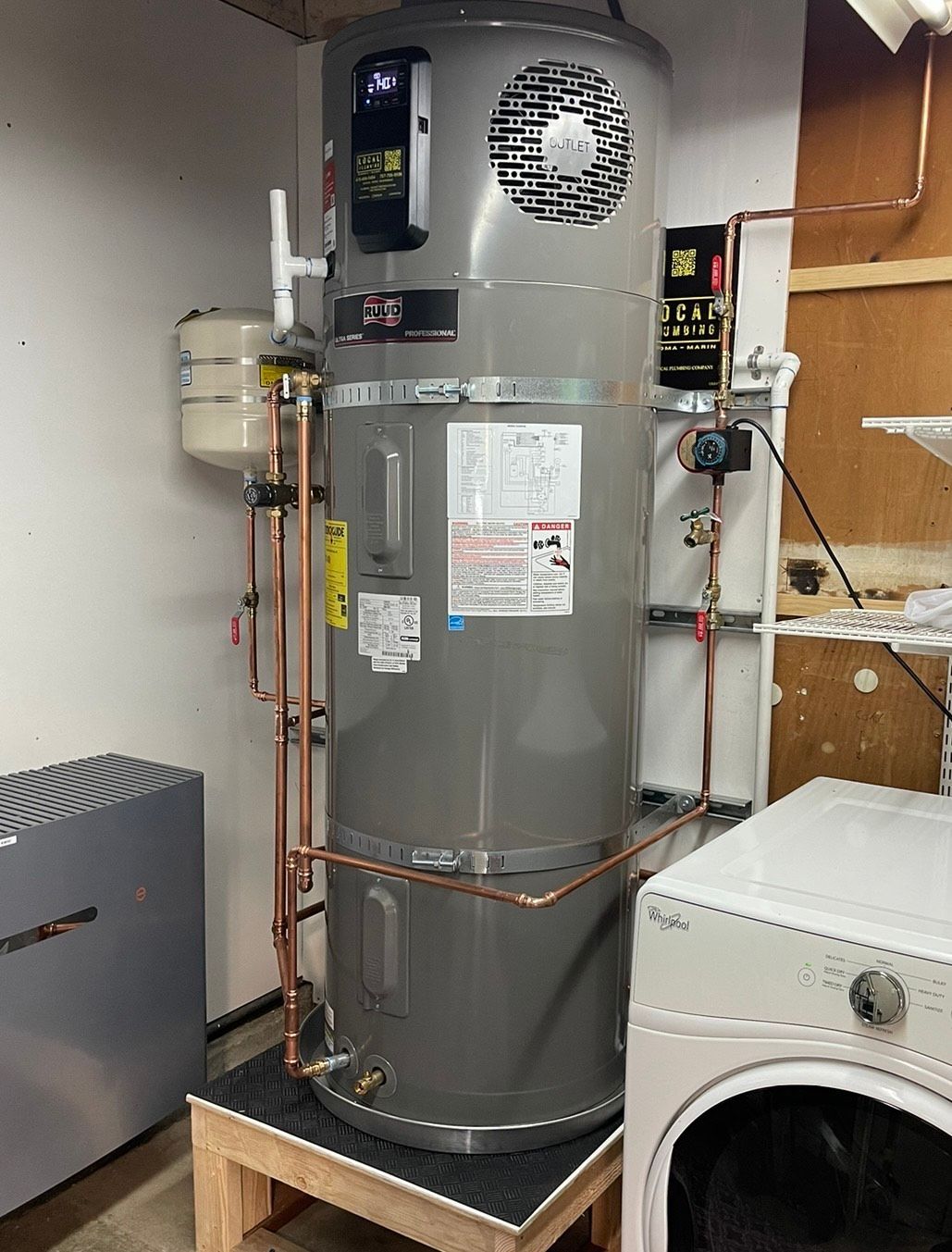
All-electric, already zero-NOx, and eligible for local rebates. Needs room for airflow, a condensate drain and electrical capacity; 120V plug-in models suit some homes. Typically $6,500–$12,000 before rebates. See our heat pump water heater page.
Gas tankless
Whole-house tankless units fall in the 2033 class, so they can still be installed. Needs a properly sized gas line and a vent route. Typically $4,800–$6,900.
Every home is different, which is why we provide on-site evaluations and a written estimate before any work.
The Reality of Switching to Electric
Heat pump water heaters are an excellent option in the right home, but they require more planning than a typical gas replacement.
Common challenges we see in Marin homes include:
Electrical limitations
- Many homes have 100 amp panels that may not support a new electric system
- Panel upgrades are often required
Space constraints
- Heat pump units are larger than standard tanks
- They require airflow and clearance
- They are difficult to install in tight closets or crawlspaces
Installation differences
- Condensate drainage is required
- Noise should be considered if installed near living areas
- Installation timelines are typically longer
Heat Pump Water Heater Rebates
- MCE customers (Marin): MCE currently offers up to $3,000 ($5,000 for ultra-low-GWP models) when a participating contractor installs it. The two amounts can’t be combined, and the rebate is applied for before the install, not after.
- Sonoma Clean Power customers: up to $2,500 on a qualifying heat pump water heater through March 1, 2028. After that date the rebate is limited to CARE and FERA customers. Apply within 90 days of completion.
Rebate terms change, so check current details at mcecleanenergy.org or sonomacleanpower.org before you buy.
What Is the Right Move for Your Home
There is no one size fits all answer.
At Local Plumbing, we help you evaluate:
- The age and condition of your current system
- Your electrical capacity
- Available installation space
- Your long term plans for the home
- Available rebates and incentives
Serving Homeowners Across Marin and Sonoma
We provide water heater replacement and planning services in:
- San Rafael
- Sausalito
- Mill Valley
- Novato
- Petaluma
And throughout the surrounding North Bay communities.
Frequently Asked Questions
Is the Bay Area gas water heater ban still starting in 2027?
No. On November 4, 2026 the Bay Area Air District moved the date for home gas tank water heaters to units manufactured after January 1, 2028. Gas tanks can still be installed through 2027.
Will gas water heaters be illegal to own?
No. Nobody has to remove a working gas water heater, and repairs are allowed. The rule applies only when a new heater is sold or installed.
Can I still install a gas water heater after January 1, 2028?
Only in some cases: with an Air District exemption certificate issued before the install, as a contractor’s temporary replacement for up to 12 months, for a tank of 30 gallons or less, or for a tank manufactured before January 1, 2028. Otherwise the new heater has to meet the zero-NOx standard.
Who qualifies for an exemption?
Low-income and housing-cost-burdened owners, homes with qualifying space, ceiling-height or electrical limits (one time per address), and hydronic, multifamily and affordable housing uses. The Air District decides each case, and its certificate system and fee are not set up yet.
What happens if my water heater breaks after 2028?
A licensed contractor can install a temporary gas replacement for up to 12 months while a compliant unit or an exemption is arranged, so you aren’t left without hot water. Through 2027, a gas tank can simply be replaced with gas.
Does the rule apply to boilers and tankless water heaters?
Yes, but later. Boilers and gas water heaters above 75,000 BTU/hr, including most home boilers and whole-house tankless units, are covered for units manufactured after January 1, 2033. Until then they can still be installed.
Does the rule apply in Healdsburg or Santa Rosa?
Santa Rosa, Petaluma and the rest of southern Sonoma County are in the Bay Area Air District, so it applies there. Healdsburg, Cloverdale, Geyserville, Guerneville and the coast are not. Windsor, Sebastopol, Occidental and Valley Ford depend on the address.
Are heat pump water heaters worth it?
In the right home, yes. They are energy efficient, already meet the zero-NOx standard and qualify for local rebates, but they need the right space, a drain and enough electrical capacity.
Talk to a Local Expert Before You Decide
Do not wait until your system fails and you are forced into a rushed decision.
At Local Plumbing, we help homeowners make informed choices, whether that means replacing with gas in 2027 or planning for a heat pump.
We offer:
- On site evaluations
- Honest recommendations
- Clean and professional installation
- Local expertise in Marin and Sonoma
MCE and Sonoma Clean Power offer rebates on qualifying heat pump water heaters. Ask us what applies at your address. *Terms apply.
Book & Mention Offer