Sump Pump Replacement in Tiburon: Get Ready Before the First Big Storm
Tiburon's hillside lower levels and bay-front lots take on water every winter. Here's how to tell whether your sump pump is ready for the first atmospheric river, and what we check before the rain starts.
The first real storm of the season is when a sump pump shows whether it still works. If you have a lower level, crawlspace, or basement on the Tiburon peninsula and you aren't sure your pump will start when the water rises, call or text Local Plumbing at (415) 234-0370. We'll test it before the rain does.
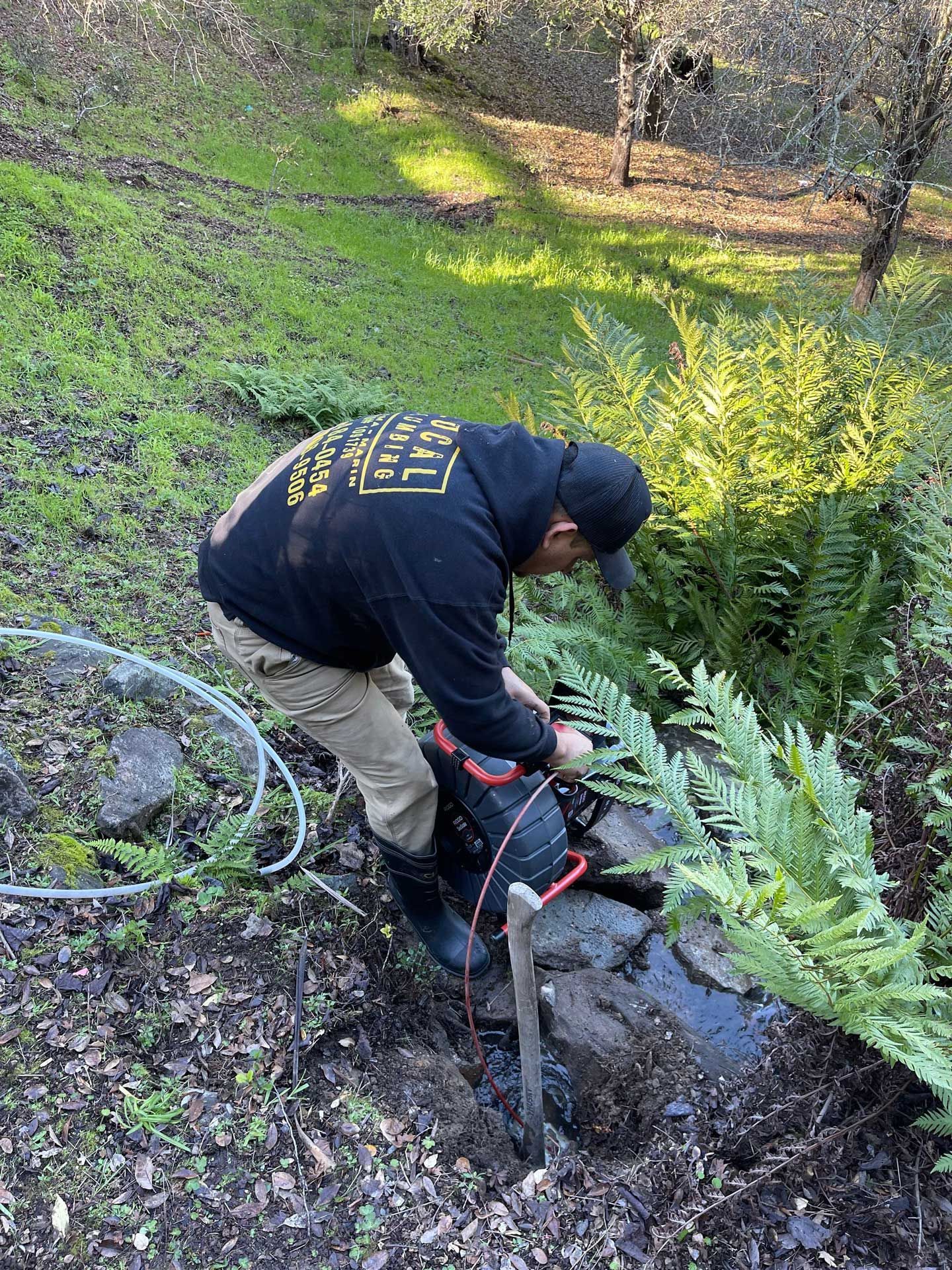
Last week we replaced a sump pump on the peninsula that had quietly stopped working. Nobody knew until we tested it, and that's typical. A sump pump can sit idle from April to October, and the first time anyone finds out it's dead is when there's water on the floor. Here's what we look for, why Tiburon homes are especially exposed, and what to do this month.
Why Tiburon Homes Rely on Sump Pumps
Tiburon is beautiful to build on and hard to keep dry. A few local patterns we see over and over:
- Hillside homes with lower levels cut into the slope. Many homes above Old Tiburon, along the ridge, and in the neighborhoods off Paradise Drive have a downhill floor dug into the hill. When the hillside saturates, groundwater pushes against the foundation and comes up through the slab or into a crawlspace. A sump basin collects it, and the pump sends it out and away.
- Low, bay-adjacent lots. Around Lyford Cove, Belveron, Paradise Cay, and the Belvedere Lagoon, a high water table and king tides leave water with nowhere to drain. Garages, mechanical rooms, and crawlspaces at grade are common trouble spots.
- Remodeled lower levels. A finished family room, wine room, or guest suite on the lower floor raises the stakes. A sump failure there means wet flooring, drywall, and sometimes damaged boilers or water heaters in the same space.
Because the slope moves water fast, these homes can go from dry to wet within hours of a heavy band of rain. The pump has to be ready before that happens.
Sump Pump vs. Ejector Pump: Know Which One You Have
Homeowners mix these up, and the difference matters:
- A sump pump handles groundwater and storm water. It sits in a basin in the floor or crawlspace, usually with a perforated or open liner, and pumps clear water to a storm drain, a dispersal area, or the street.
- A sewage ejector pump handles wastewater from a lower-level bathroom or laundry. It sits in a sealed, vented basin and pushes waste up to the sewer.
Some homes here have both. If your lower level has a toilet or a washer below the main sewer line, you have an ejector too. We cover those in our ejector pump guide.
Signs Your Sump Pump Needs Attention
Call us before the next storm if you notice any of these:
- The pump hums but doesn't move water, or doesn't start when you lift the float
- It runs constantly, or cycles on and off every few seconds
- There's standing water in the basin that never seems to go down
- A rattle or loud clunk when it shuts off (often a failed check valve, so water falls back into the pit)
- Rust, corrosion, or a tripped GFCI at the outlet
- The discharge line is cracked, disconnected, or dumping right next to the foundation
- The pump is older than about 7–10 years, or nobody knows how old it is
The pump we replaced last week had simply stopped running. It wasn't jammed or clogged, it had just reached the end of its life. A two-minute test would have caught it months earlier.
What We Check on a Sump Pump Visit
A sump visit from Local Plumbing goes beyond "it turned on":
- Run test with real water. We fill the basin and watch the full cycle: float rise, start, pump-down, shut-off.
- Float and switch. Tethered and vertical floats can hang up on the basin wall or on debris. We check the clearance and the switch.
- Check valve. We confirm it holds, so the discharge water doesn't drain back and make the pump short-cycle.
- Discharge route. We follow the line outside and make sure it ends where it should, away from the foundation and not into your sewer cleanout. Groundwater belongs in the storm system or a dispersal area, not the sanitary sewer.
- Electrical. Dedicated outlet, GFCI condition, and whether the cord and plug are in good shape.
- Basin condition. Silt, gravel, and debris shorten pump life. We clean out what we can reach.
- Capacity. If the pump runs nonstop in a storm, it may be undersized for your lot, or the basin may be too small. We'll tell you honestly.
Replacement: What a Good Install Looks Like
When a pump fails, we match the replacement to the basin and the amount of water your property actually sees. On last week's job, we installed a 1/2 HP, 120V Zoeller submersible with a 1.5-inch discharge, reconnected the discharge piping, checked the check valve, and ran it through several full cycles before we left.
For most homes, a quality cast-iron submersible from Zoeller or Liberty Pumps is the right call. Depending on the home, we'll also recommend:
- A high-water alarm. It's inexpensive, and it tells you the pump isn't keeping up before the floor gets wet.
- A battery backup pump. Big winter storms and power outages tend to arrive together in Marin. A backup pump keeps running when PG&E doesn't.
- A second pump in the same basin for lower levels that take on a lot of water.
- A union and shutoff on the discharge, so the next pump swap is quick and clean.
When to Do This: Now, Not in January
Most sump calls we get come during or right after a storm, when everyone else is calling too. October and early November are the time to:
- Test the pump yourself. Pour a bucket of water into the basin and make sure it starts and drains.
- Walk the discharge line and clear leaves from the outlet.
- Check your gutters and downspouts. Roof water dumped next to the house ends up in your sump basin.
- Book a test if anything seems off, especially if the pump is older or you've never had it looked at.
If the pump fails during a storm, shut off power to any equipment sitting in water, move what you can, and call us. We carry common sump pumps on the truck.
Sump Pump FAQs
How long does a sump pump last?
Most last about 7–10 years. Pumps that run often, in silty basins or on hillside lots that stay wet all winter, usually wear out sooner. If yours is older or you don't know its age, test it before the rain starts.
Can my sump pump drain into the sewer?
Generally no. Groundwater and storm water shouldn't go into the sanitary sewer. We route discharge to the storm system or a dispersal area away from the foundation.
Do I need a battery backup sump pump in Tiburon?
If your lower level is finished or holds mechanical equipment, we recommend it. Winter outages often happen during the same storms that fill your sump basin.
Is my pump a sump pump or an ejector pump?
If it handles water from a toilet, shower, or washer, it's an ejector pump in a sealed basin. If it only collects groundwater from the floor or crawlspace, it's a sump pump.
Storm-Season Help in Tiburon and Belvedere
Local Plumbing tests, repairs, and replaces sump pumps and sewage ejector pumps in Tiburon, Belvedere, Strawberry, Mill Valley, Sausalito, and across Marin and Sonoma counties. We're a licensed C-16 and C-36 contractor (Lic #1091739) with 340+ five-star Google reviews, and our warehouse is in San Rafael, so we're never far away.
Call or text (415) 234-0370, or send us a message, to get your sump pump tested before the first big storm.