Radiant Floor Heating Not Working in San Anselmo? Causes and Fixes
Cold floors, one zone that won't heat, a boiler that keeps losing pressure: here's what usually goes wrong with radiant heat in San Anselmo homes, and how we track it down before you start breaking up floors.

The first cold mornings in the Ross Valley are when radiant floor problems show up. You turn the heat on for the first time since spring and one room stays cold, the floors never get past lukewarm, or the boiler pressure keeps dropping. If your radiant heat isn't working in San Anselmo, call or text Local Plumbing at (415) 234-0370 and we'll find the cause before anyone starts opening floors.
How Radiant Floor Heat Works (and Why It Fails Quietly)
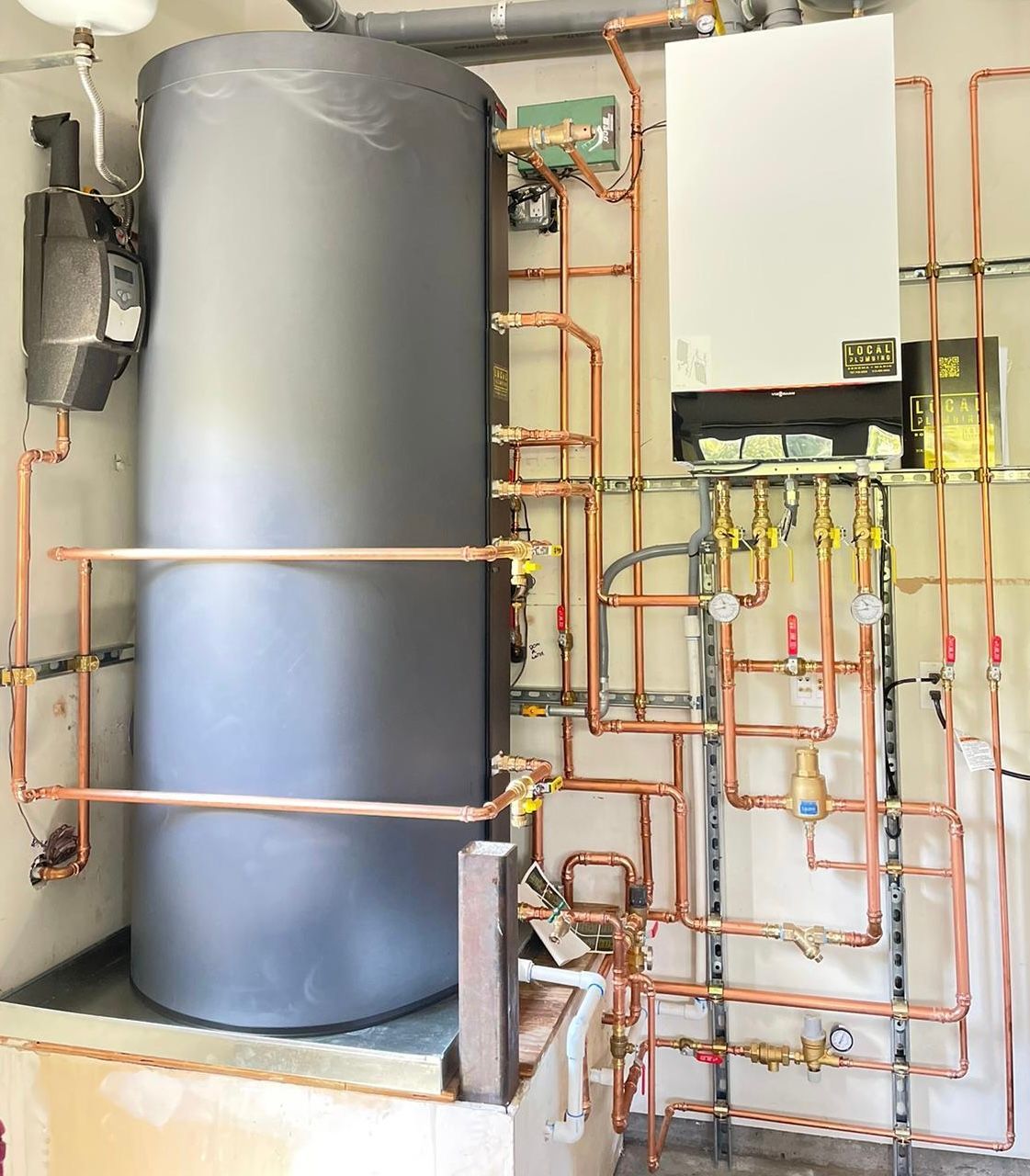
A radiant floor system is simple on paper. A boiler heats water, a circulator pump moves it, a manifold splits it into loops of tubing under the floor, and thermostats open and close each zone. The floor warms up slowly and gives off even, quiet heat.
Because it's quiet and slow, small problems hide for a long time. A loop can be partly blocked for a whole winter before anyone notices that the back bedroom is always a few degrees colder. And because the system sits idle all summer, fall is when worn parts finally give up.
Common Signs Your Radiant Heat Needs Service
- One room or zone stays cold while the rest of the house is fine
- The whole floor is lukewarm, even after the heat has been on for hours
- Boiler pressure keeps dropping below about 12 PSI, or you're topping it off with water
- Gurgling or rushing water sounds in the walls or at the manifold (air in the system)
- A warm spot on the floor that stays warm even when the heat is off, or a damp patch on a slab or lower-level wall
- The boiler short-cycles, turning on and off every few minutes
- A water bill that crept up with no obvious leak
None of these mean you need a new system. Most of the time the fix is a part, not a floor.
What Usually Goes Wrong
Zone valves and manifold actuators
Each zone is opened by a zone valve or a small electric actuator on the manifold. These fail more than anything else. A stuck actuator leaves one zone cold, and a failed end switch can stop the boiler from firing for that zone at all. They're usually a quick, inexpensive repair.
Circulator pumps
If the pump has seized or is running weak, hot water never makes it through the loops. A pump that hums but doesn't move water, or one that runs hot to the touch, is a common fall failure after a summer sitting still.
Air in the loops
Air blocks flow and makes noise. Systems that have lost pressure, or were refilled after a repair without a proper purge, end up with air pockets in the high points. We purge each loop individually at the manifold.
Mixing valves and supply temperature
Radiant floors run much cooler than baseboard or radiators, often around 90–120°F at the floor loops. A mixing valve or the boiler's own reset control holds that temperature. If the mixing valve sticks or the boiler settings are wrong, you get floors that never warm up, or water that's too hot for the tubing and the flooring above it.
Leaks in the slab or under the floor
This is the one homeowners worry about. Older radiant slabs often used copper or steel tubing set in concrete, and decades of contact with the slab can corrode it until a pinhole develops. Newer systems use PEX, which doesn't corrode. But early PEX without an oxygen barrier lets oxygen into the water, which rusts the boiler, pump and other iron parts and fills the system with sludge.
A slow slab leak shows up as a boiler that keeps losing pressure, and sometimes a warm spot on the floor.
What's Different About Radiant Heat in San Anselmo
San Anselmo's housing mix makes radiant heat both common and a little tricky:
- Mid-century homes in Sleepy Hollow and the hills off Butterfield were often built with radiant slabs. Many still have their original tubing in the concrete, now 60 or more years old.
- Older homes near downtown, the Seminary and Red Hill have had radiant floors added under hardwood or tile during remodels, often in phases, with a different installer each time. We regularly find two manifolds, two kinds of tubing and controls that don't talk to each other.
- Lower levels near San Anselmo Creek and the Ross Valley floor tend to be damp. Moisture is hard on boiler venting, near-boiler fittings and manifold connections, so corrosion shows up sooner.
- Hillside lots put boilers in tight lower-level mechanical rooms and closets, which affects what replacement equipment fits if it comes to that.
How We Find the Problem (Without Tearing Up Floors)
On a radiant service call we work from the simplest cause to the most expensive:
- Check the boiler. Pressure, temperatures, error codes, and a combustion analysis. We do combustion analysis on every boiler service.
- Check the controls. Thermostats, zone valves, actuators, end switches and the mixing valve.
- Check flow. Circulator operation, then each loop at the manifold, purging air as we go.
- Pressure-test the system if it's losing water, isolating zones one at a time to find which loop is leaking.
- Thermal imaging. A thermal camera shows the heat pattern of the tubing through the floor. It tells us where loops run, which ones aren't getting flow, and where a leak is likely, before we touch the floor.
Repair or Replace?
Most radiant calls are repairs: an actuator, a pump, a mixing valve, a purge. Even a slab leak doesn't always mean a big project. Depending on where it is, the options include a spot repair at the leak, abandoning one damaged loop and rerouting that zone, or adding new tubing above the slab during a flooring project.
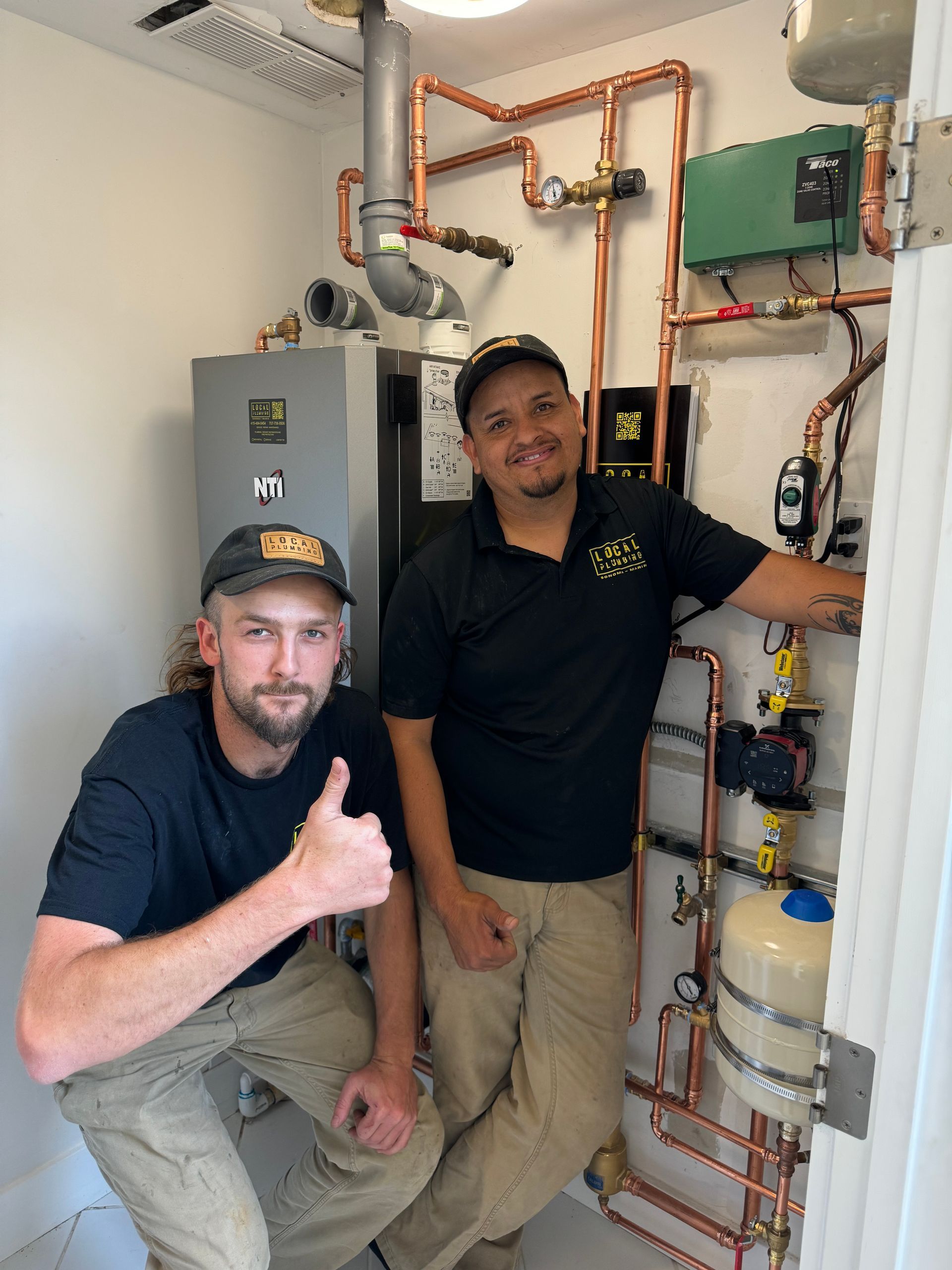
Replacement makes sense when the boiler is the problem: it's past about 15–20 years, needs parts that are hard to get, or keeps failing. In that case a modern modulating condensing boiler (we install a lot of NTI, Navien and Lochinvar) paired with proper radiant controls usually runs the floors more evenly and uses less gas. Under the current Bay Area Air District rule, home-size gas boilers made after January 1, 2031 must be zero-NOx (a July 2026 draft would move that to 2033), so new gas boilers can still be installed today.
San Anselmo Radiant Heat FAQs
Why is only one room cold with radiant floor heat?
Usually a failed zone valve or manifold actuator, air trapped in that loop, or a thermostat problem. All three are common, inexpensive repairs. A blocked or leaking loop is less common.
Why does my boiler keep losing pressure?
Water is getting out somewhere. It could be a leaking relief valve, a fitting at the boiler or manifold, or a leak in the tubing under the floor. We isolate each zone and pressure-test to find which one.
Can you find a slab leak without breaking up the floor?
In most cases we can narrow it down to a loop with pressure testing and then pinpoint it with thermal imaging before any concrete is opened. Opening the floor is the last step, and only where it's needed.
How long should radiant floor tubing last?
Modern oxygen-barrier PEX is expected to last decades. Older copper or steel tubing set in concrete is where we see most slab leaks, especially in homes from the 1950s and '60s.
Radiant Heat Repair in San Anselmo, Fairfax, Ross and Kentfield
Local Plumbing specializes in boilers and radiant heat across Marin and Sonoma counties. Our warehouse and training facility is in San Rafael, a short drive from San Anselmo. We're a licensed C-16 and C-36 contractor (Lic #1091739) with 340+ five-star Google reviews. Learn more on our radiant heating repair page, or read our guide to radiant heat repair in Marin and Sonoma.
Floors not warming up this fall? Call or text (415) 234-0370, or contact us to book a radiant heat service visit.