Tankless Water Heater Installation in Santa Rosa: Tank-to-Tankless
Thinking about trading your tank for a tankless water heater in Santa Rosa? Here's what a real tank-to-tankless conversion involves, what Bennett Valley, Fountaingrove and Oakmont homes need to plan for, and how the Bay Area's new rules affect your choice.
If your tank water heater in Santa Rosa is getting older and you're tired of running out of hot water, a tankless conversion may be the right move. And under the current Bay Area rules, it's still an option for a gas home. Call or text Local Plumbing at (415) 234-0370 for a straight answer on whether tankless makes sense in your house.
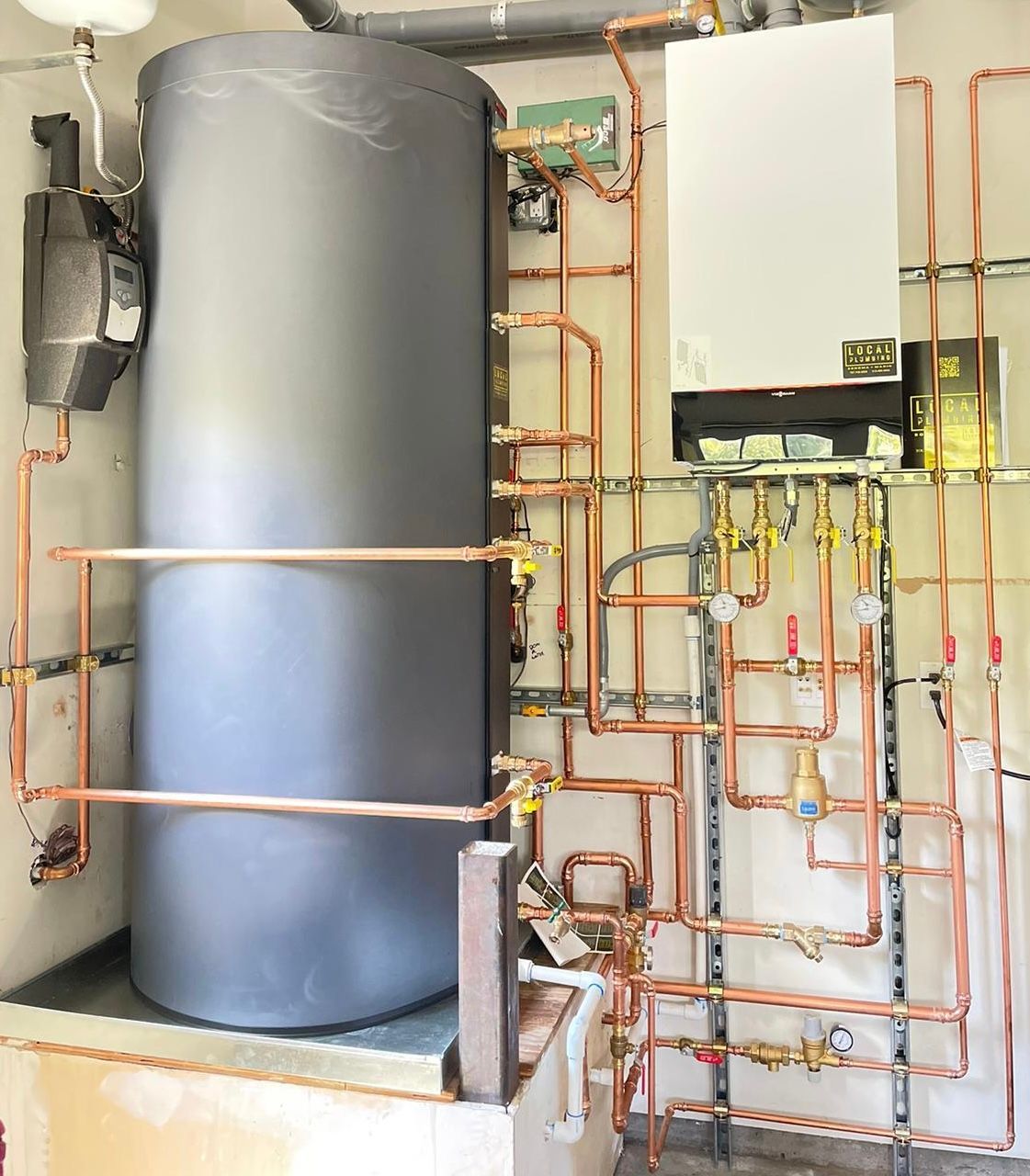
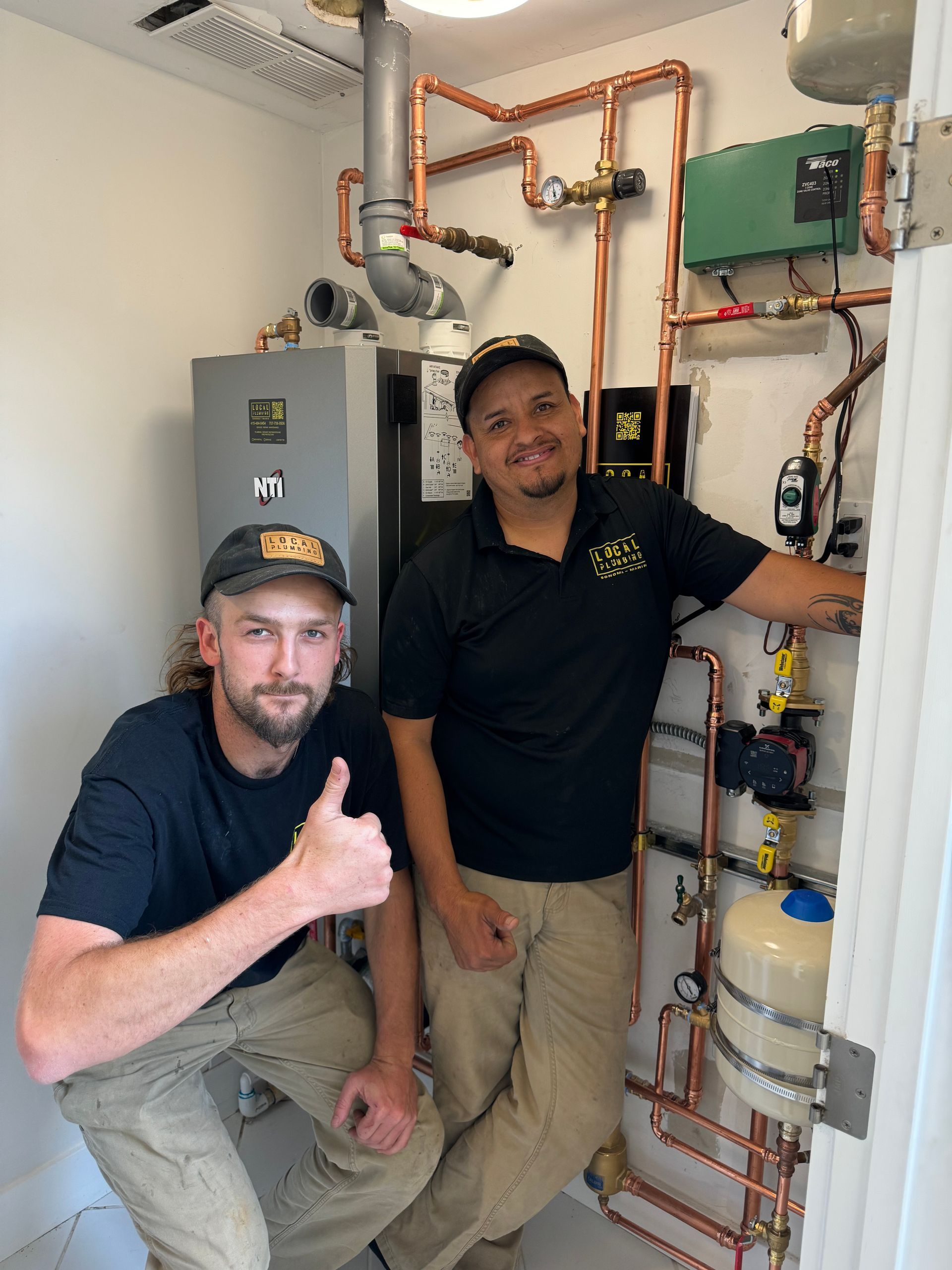
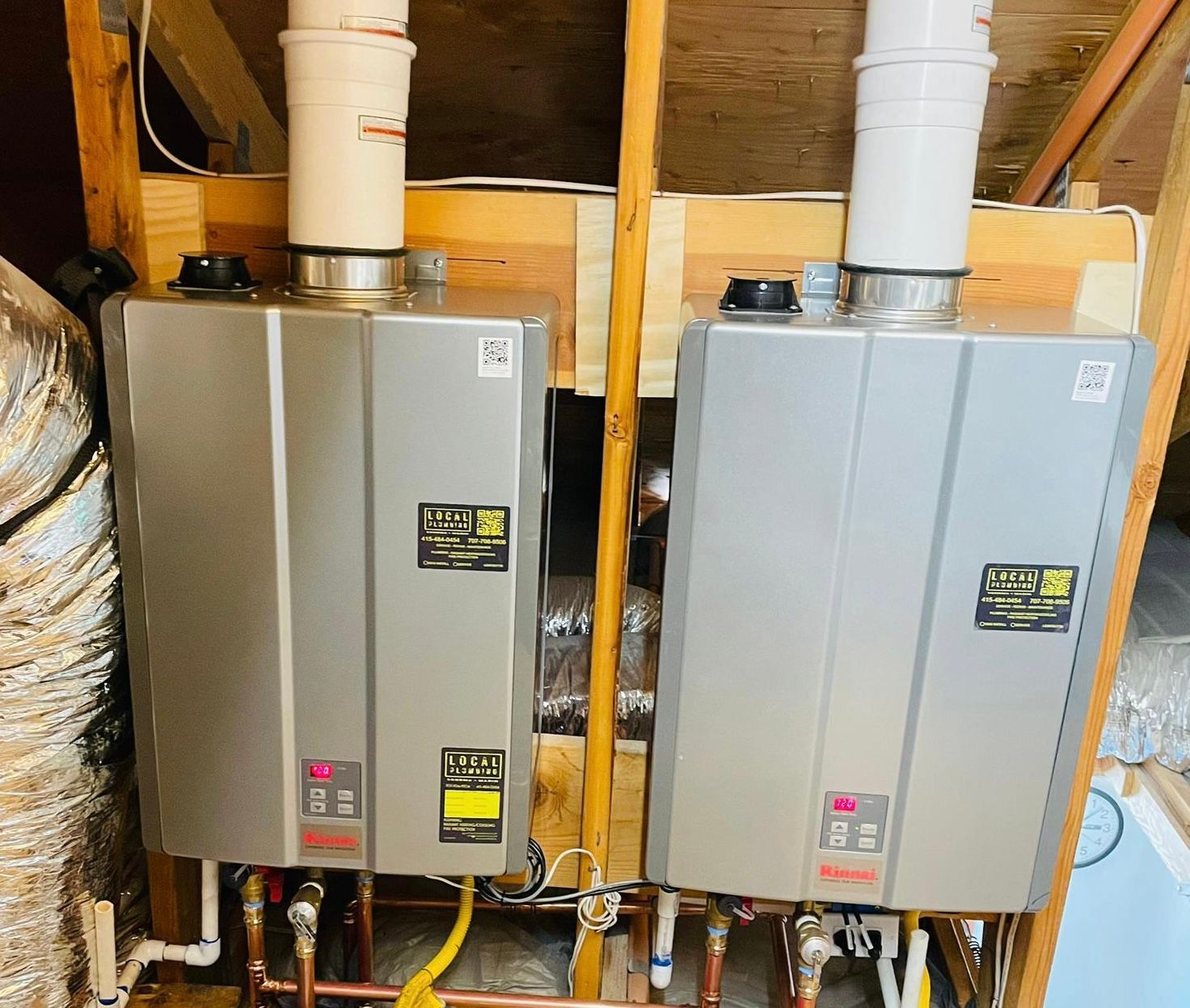
We recently converted an east Santa Rosa home from a standard gas tank to a Navien NPE-240A2 condensing tankless water heater, with recirculation so hot water reaches the bathroom faster. It's a good example of what a clean conversion looks like, and of the questions to ask before you commit.
Why Santa Rosa Homeowners Are Switching to Tankless
The calls we get from around town usually fall into a few groups:
- Bennett Valley, Montecito Heights, and Rincon Valley homes from the 1960s–80s, where the original tank has been replaced once or twice and sits in a garage or closet that the owners would like back.
- Fountaingrove and Coffey Park rebuilds after the 2017 fires. Many were built with gas tanks or first-generation tankless units that are now coming due for service or replacement.
- Oakmont and Skyhawk homeowners who want endless hot water for visiting family without a second tank.
- Larger homes with long pipe runs, where the real complaint isn't running out of hot water, it's waiting a minute or more for it to arrive.
Tankless solves the first three well. The last one needs recirculation, which we'll get to.
What a Tank-to-Tankless Conversion Involves
A tankless install is more than unbolting a tank and hanging a box on the wall. On that recent job, the scope looked like this:
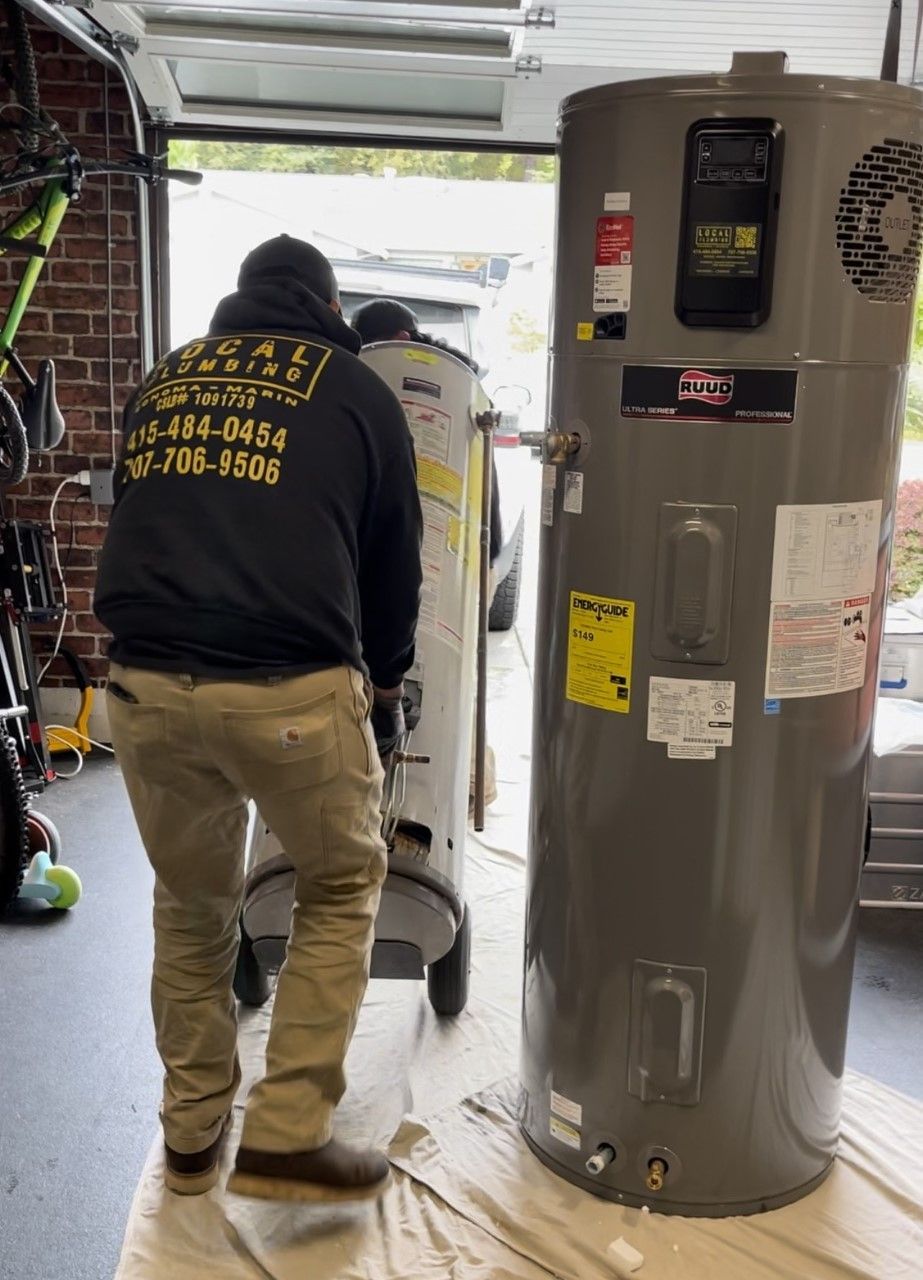
- Remove and dispose of the old tank.
- Install the condensing tankless unit, a Navien NPE-240A2, sized for the home's bathrooms and simultaneous use.
- Convert the venting. A condensing tankless vents with PVC instead of a metal flue. In this house we could run the new PVC through the existing vent path, so no new roof penetration was needed. That isn't always possible, and it's one of the biggest swing factors in cost.
- Set up condensate drainage with a neutralizer. Condensing units produce acidic water that has to be neutralized and routed to a drain.
- Install recirculation. Navien's NaviCirc valve went in at the bathroom sink farthest from the heater, so hot water shows up faster without a dedicated return line.
- Test, calibrate, and walk the homeowner through the controls.
Gas supply: the question most people don't ask
A whole-house tankless burns a lot more gas at full fire than a 40- or 50-gallon tank. Before we quote, we check your gas meter size, gas line size, and pipe length back to the meter. Some homes are fine as-is. Others need a larger line or a meter upgrade from PG&E. We'd rather find that before install day than after.
Tankless and the 2027 Bay Area Rule
Santa Rosa is in the Bay Area Air District, so its water heater rule (Regulation 9, Rule 6) applies here. (Healdsburg and the north county are under a different air district.) Here's how it lines up today:
- Small gas tank water heaters (75,000 BTU/hr and under) made after January 1, 2027 must be zero-NOx (a proposed amendment could push this to 2028). In practice, that means a heat pump for most tank replacements.
- Larger gas water heaters, including whole-house tankless units, fall into the 75,001–2,000,000 BTU/hr class. Under the current rule, that class goes zero-NOx in 2031 (a July 2026 draft would move it to 2033).
- The rule applies when equipment is sold or installed. Nobody has to remove a working water heater.
So for a gas home that wants to stay on gas, a condensing tankless is still a legitimate long-term choice. It isn't the only good one: a heat pump water heater is very efficient and avoids the gas question entirely, if you have the space, airflow, and electrical capacity for it. We install both and will tell you which fits your house. See our 2027 gas water heater rule guide for the details.
Is Tankless Right for Your Home?
Tankless is usually a good fit if:
- Your tank is 10+ years old or leaking
- You want the floor space back
- You run out of hot water with a full house
- Your gas service can support it, or can be upgraded reasonably
It may not be the best fit if:
- The only vent route means a long, complicated new run
- Your gas meter or line needs a major upgrade
- You'd rather move to an all-electric home now (a heat pump water heater is the better path)
Water quality matters
Most Santa Rosa homes get City of Santa Rosa water, much of it from the Russian River system through Sonoma Water. Homes on private wells in the hills around Bennett Valley, Rincon Valley, and toward Kenwood can have much harder water. Scale is the main thing that shortens a tankless heat exchanger's life. We'll recommend an annual descaling flush, and a softener or scale-reduction filter where the water calls for it.
What Affects the Cost
Every home differs, so we quote in person, free. The main cost drivers are:
- Venting: reusing an existing path vs. a new run or roof penetration
- Gas line or meter upgrades
- Recirculation (a NaviCirc valve vs. a dedicated return line)
- Location: garage wall vs. attic vs. exterior install
- Permits and any water treatment
Tankless Water Heater FAQs
Can I still install a gas tankless water heater in Santa Rosa after 2027?
Under the current Bay Area rule, whole-house gas tankless units fall in the 75,001–2,000,000 BTU/hr class, which goes zero-NOx in 2031 (a July 2026 draft would move it to 2033). The January 2027 date applies to small gas storage tanks.
How long does a tank-to-tankless conversion take?
Most straightforward conversions are done in a day. Jobs that need a new vent run or gas line work can take longer.
Will tankless fix the wait for hot water?
Not by itself. The wait comes from pipe length. A recirculation valve like Navien's NaviCirc, or a dedicated return line, is what shortens it.
Do tankless water heaters need maintenance?
Yes. Plan on a descaling flush and filter check about once a year, more often with hard well water.
Tankless Installation in Santa Rosa and Sonoma County
Local Plumbing installs and services Navien and Rinnai tankless water heaters, plus heat pump water heaters, in Santa Rosa, Bennett Valley, Fountaingrove, Oakmont, Rohnert Park, Petaluma, and across Sonoma and Marin counties. We're a licensed C-16 and C-36 contractor (Lic #1091739) with 340+ five-star Google reviews. Learn more about our Navien tankless installs.
Call or text (415) 234-0370, or contact us online, for a free in-home estimate.