Water Heater Replacement in Petaluma: Gas or Heat Pump After 2028?
Two Petaluma homes, two good answers: a 75-gallon gas tank in the same spot, and an outdoor SanCO2 heat pump water heater.
A house full of guests is when a tired water heater gives out: extra showers, the dishwasher running twice, laundry on top of it. If yours quits this week, or you've been putting off a replacement, here's how two Petaluma homes handled it this year, and how the Air District's 2028 rule changes the choice. If you're out of hot water now, call or text Local Plumbing at (415) 234-0370.
Two Real Petaluma Jobs, Two Good Answers
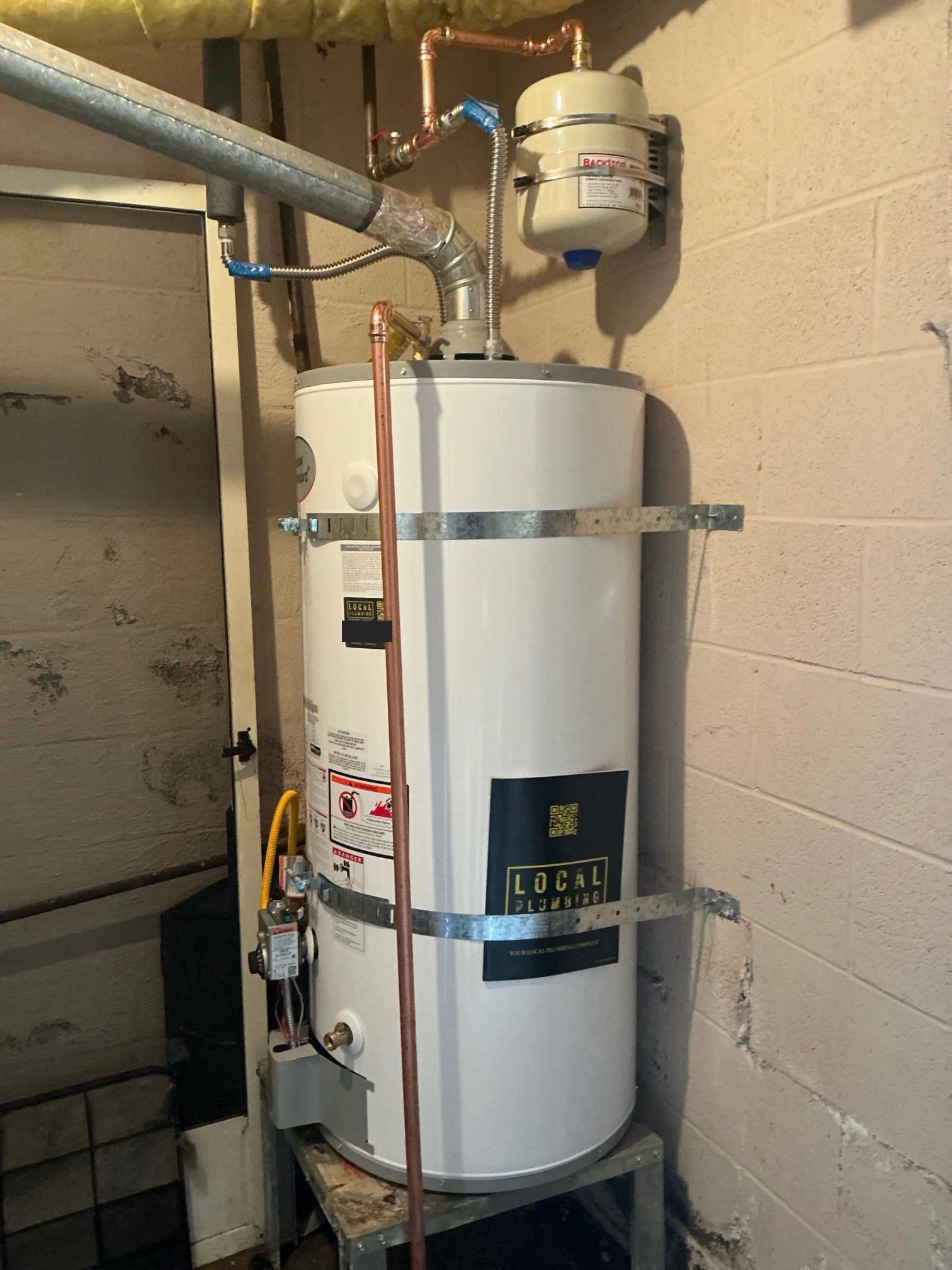
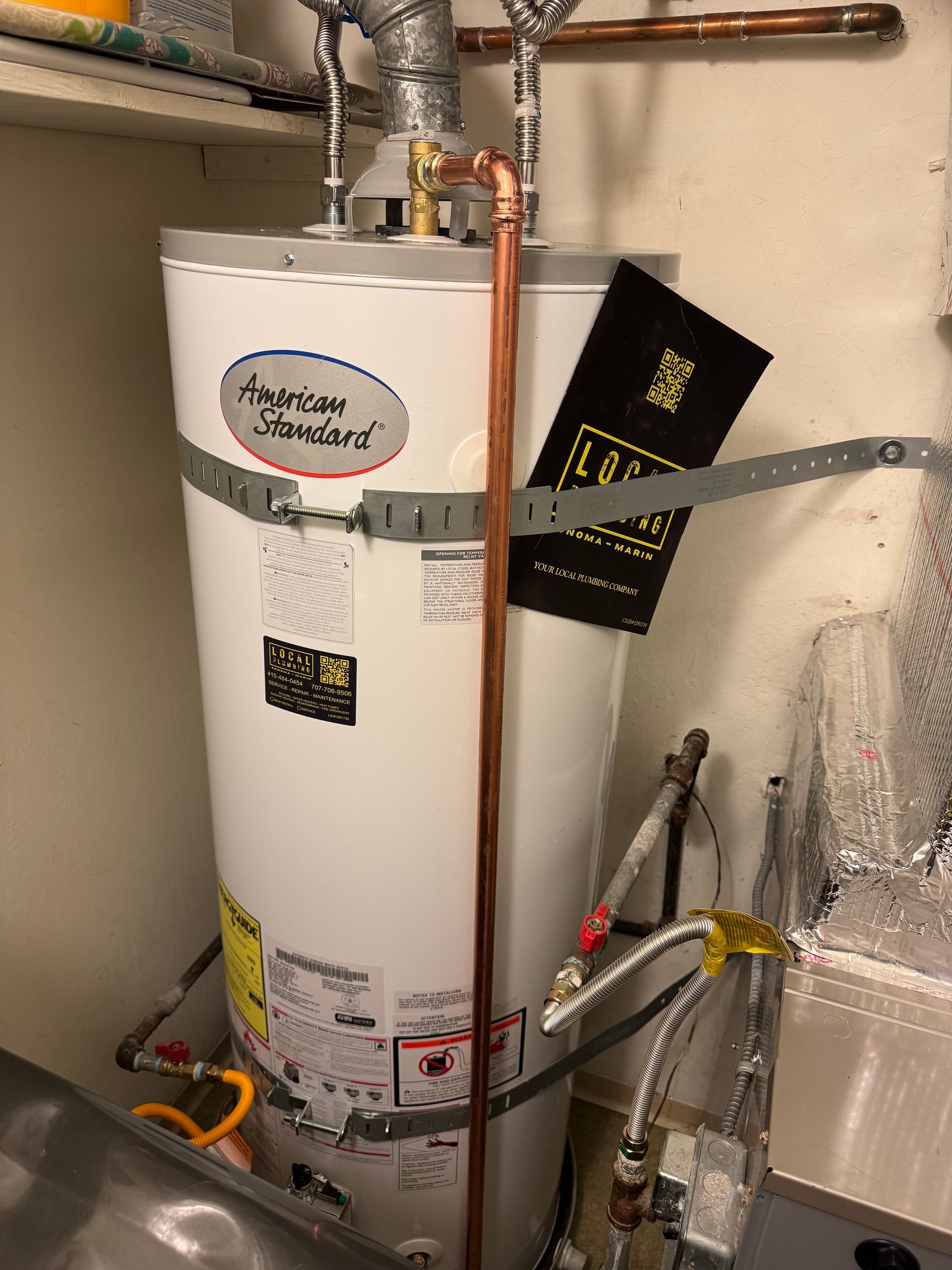
Job 1: A 75-gallon gas tank, same spot
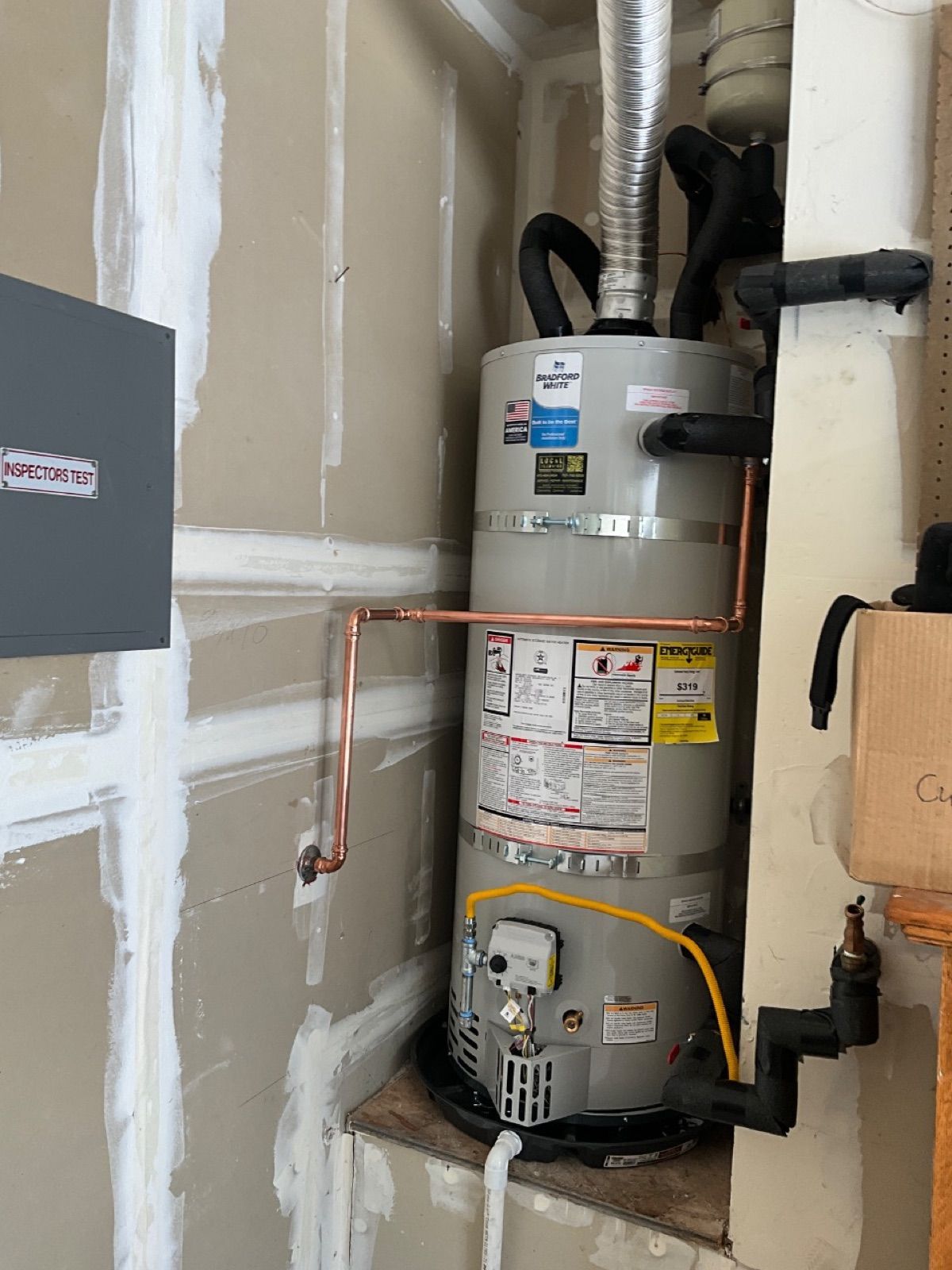
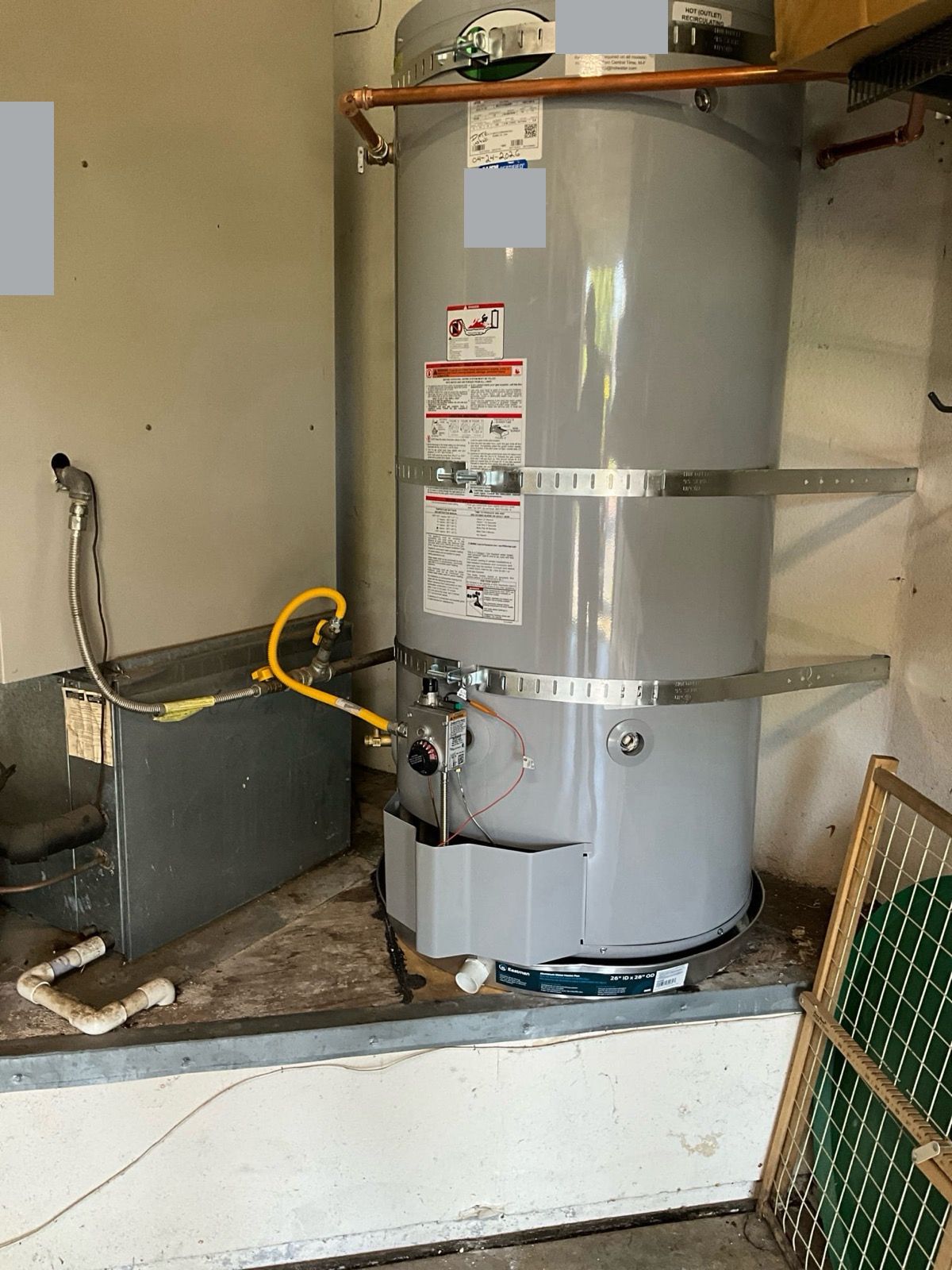
In April, an east Petaluma household needed a new water heater and wanted the simplest fix. We:
- Installed a new 75-gallon A.O. Smith gas water heater in the same location, connected to the existing flue.
- Added a thermal expansion tank. Without one, pressure builds every time the heater fires, which is hard on the relief valve, fittings and tank.
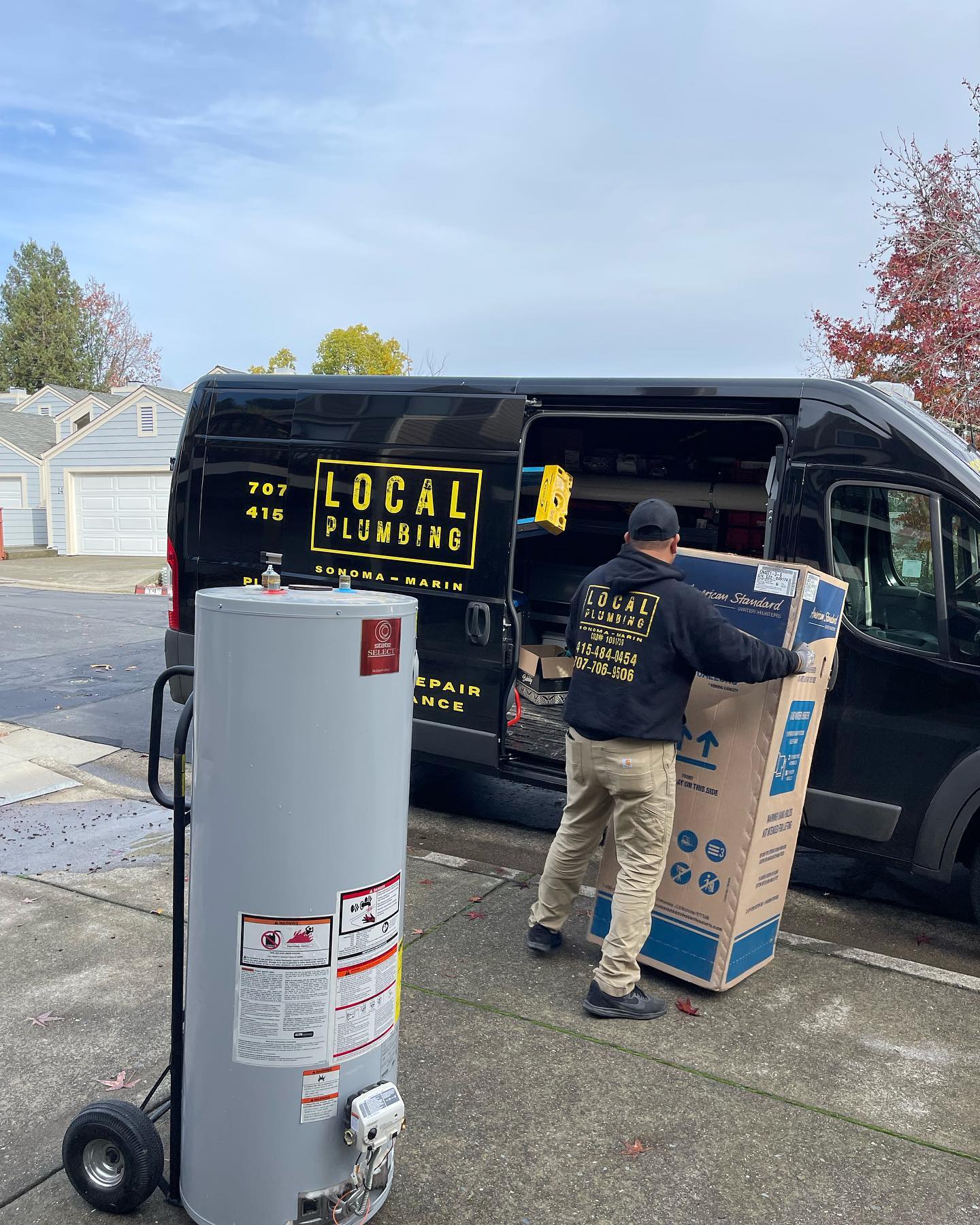
- Fitted new gas and water flex connectors, strapped it for earthquakes, and hauled the old heater away.
A 75-gallon tank is a big tank. It makes sense for a large household or a big soaking tub, where a 40- or 50-gallon tank runs out.
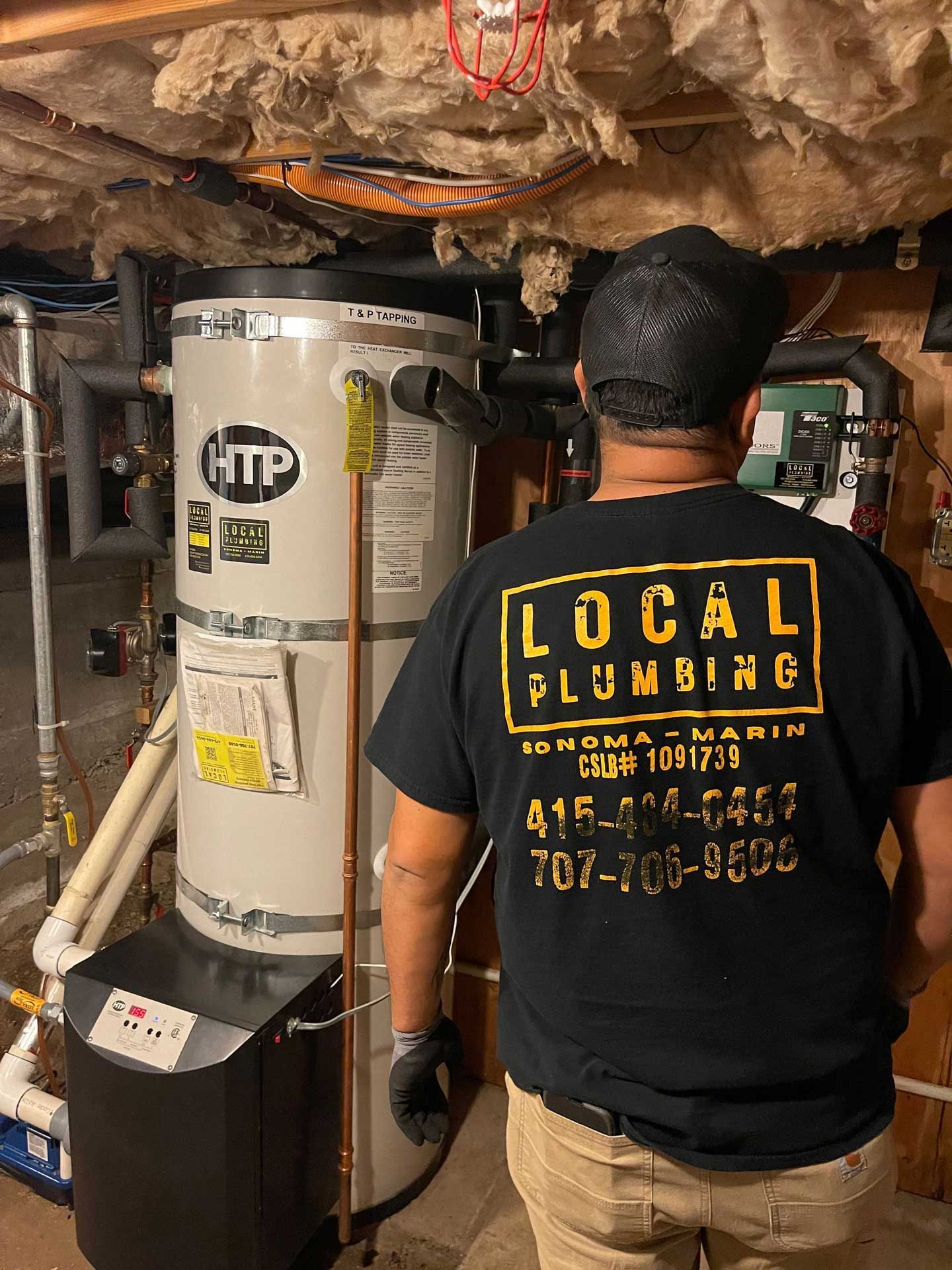
Job 2: Gas to electric with an outdoor heat pump
In May, a west Petaluma homeowner moved off gas entirely. Noise was a concern with an indoor heat pump, so we installed a SanCO2 split system:
- An outdoor CO2 heat pump (SanCO2 GS4-45) that makes the heat outside the house, so there's no compressor noise indoors.
- A 43-gallon stainless steel storage tank inside.
- A dedicated 240V, 15-amp circuit (the electrical work was done separately by an electrician).
- Permit pulled and the install inspected.
Split systems like this cost more than a standard all-in-one heat pump water heater, but they solve two common problems: noise, and a closet or garage that's too small or too cold for an indoor unit.
What the 2028 Rule Means in Petaluma
Petaluma is in the Bay Area Air District, so its water heater rule applies here. (North Sonoma towns like Healdsburg and Cloverdale are in a different air district.) On November 4, 2026, the Air District delayed the rule by a year:
- Gas tanks can still be installed through 2027. The zero-NOx requirement applies to gas tanks over 30 gallons (up to 75,000 BTU/hr) manufactured after January 1, 2028.
- Your working heater can stay. The rule applies only when a heater is sold or installed. Repairs are allowed.
- Gas tankless and boilers have a later date: units manufactured after January 1, 2033.
- Tanks of 30 gallons or less and mobile-home water heaters aren't covered by the zero-NOx requirement.
- Exemptions exist, including for low-income owners, some space and electrical constraints, and a 12-month temporary gas replacement a licensed contractor can install with an Air District certificate. The Air District decides who qualifies.
Full details are in our 2028 rule update.
The Sonoma Clean Power Rebate
If you're a Sonoma Clean Power customer, SCP currently offers up to $2,500 back on a heat pump water heater, through March 1, 2028. After that, its heat pump water heater rebates are for CARE and FERA customers only. Points to know:
- Apply within 90 days after the project is finished, usually counted from your final permit date.
- You'll need the paid invoice, the final permit and a photo of the nameplate.
- Qualifying units need a high efficiency rating (UEF 3.43 or more) and Wi-Fi, but 120V models and SanCO2 models without Wi-Fi are eligible.
- CARE/FERA customers can get 50% of the remaining project cost, up to $10,000.
SCP says its rules can change at any time, so check before you buy.
So Which Should You Choose?
- Gas tank: fastest and lowest cost, often the same day. A good fit when the old tank failed without warning, or when you're happy to plan the switch to electric later. Treat it as likely your last gas tank.
- Heat pump water heater: all-electric, cheapest to run, and where the rules are heading. It needs room for airflow (or an outdoor unit like SanCO2), a condensate drain and a suitable circuit, so it usually takes some planning.
- Gas tankless: endless hot water and a later 2033 date, but most conversions need a bigger gas line and new venting.
Petaluma's water is also harder than most of the county's. The city's water averaged 176 ppm in 2024, roughly double Sonoma Water's average. Hard water scales tank bottoms and tankless heat exchangers, so whatever you choose, an expansion tank, regular flushing and (for tankless) yearly descaling matter.
What It Costs
A gas tank replacement typically runs $3,500 to $6,500 installed, and a standard heat pump water heater $6,500 to $12,000 before rebates. Split outdoor systems like SanCO2, and any panel or circuit work, cost more and are quoted on site. Every estimate is free and in writing before work starts. See our tank water heater page and heat pump water heater page.
Petaluma Water Heater FAQs
Can I still replace my gas water heater with gas in Petaluma?
Yes. Gas tanks can be installed through 2027. The Air District's zero-NOx rule applies to tanks manufactured after January 1, 2028.
Does Sonoma Clean Power require a permit for the rebate?
Yes. SCP asks for the finalized permit, and the 90-day window usually starts on that date.
Is a heat pump water heater loud?
Indoor units hum about like a dehumidifier. If that's a concern, a split system with the heat pump outside, like the SanCO2 on this job, keeps the noise out of the house.
How big a water heater do I need?
It depends on how many people shower at once and the size of your tub. Most homes use 40 to 50 gallons. Big households or large tubs may need 75.
Water Heater Replacement Across Petaluma
We replace gas, tankless and heat pump water heaters across Petaluma, from the west side to the east side and out to Penngrove. Licensed C-16 & C-36, Lic #1091739. Call or text (415) 234-0370 or contact us. More on our Petaluma plumbing services.